Bathroom Cabinet Storage: The Ultimate Guide to Organization in 2026

Bathroom cabinet storage is one of the highest-impact upgrades a homeowner can tackle, and it doesn’t always require ripping out walls or hiring a contractor. Whether cramped quarters demand creative bathroom storage ideas or a sprawling master bath needs better organization, the right approach transforms clutter into function. Modern bathroom storage solutions range from simple cabinet swaps to custom-built shelving, each with trade-offs in cost, effort, and durability. This guide walks through assessing your space, selecting cabinets that fit your layout and budget, and implementing smart storage systems that actually stick. By the end, anyone, from first-time DIYers to seasoned remodelers, will know how to install bathroom storage cabinets, maximize every square inch, and keep the system running for years.
Key Takeaways
- Accurate measurements of your existing space and a thorough audit of stored items are essential before selecting bathroom cabinet storage solutions, as underestimating volume is a common reason organization fails.
- Wall-mounted and vanity cabinets maximize storage differently—vanity cabinets offer the most volume, while wall-mounted options work best in tight floor spaces but require proper stud-mounted fastening for safety.
- Vertical space above toilets and inside cabinet doors holds 20+ cubic feet of additional storage through narrow cabinets, floating shelves, and door organizers without consuming floor area.
- Organizing items by frequency and category—with daily-use items at arm level (36–48 inches) and backup stock on higher or lower shelves—ensures efficient access and reduces decision fatigue.
- Smart containers like stackable bins, lazy Susans, drawer dividers, and moisture-resistant materials prevent cabinet deterioration and multiply usable space, especially in humid bathrooms.
- Regular maintenance every 3–6 months, including checking expiration dates and refreshing containers, keeps your bathroom cabinet storage system efficient and prevents mold or moisture damage.
Assess Your Current Space and Needs
Before picking a cabinet or hunting for small bathroom storage solutions, measure twice and measure accurately. Pull out a tape measure and record the width, height, and depth of your existing vanity and wall space. Note any obstacles: plumbing rough-ins behind the walls, electrical outlets, vents, and pipes. A typical bathroom vanity runs 24 to 48 inches wide and sits 30 to 36 inches off the floor: actual depths vary between 18 and 24 inches.
Next, audit what you’re actually storing. Pull everything out of cabinets and the bathroom closet storage area. Separate items into categories: daily-use toiletries, hair tools, medications, cleaning supplies, and backup stock. Count how many tubes, bottles, and containers you own, this number drives cabinet depth and shelf quantity decisions. Small bathroom storage ideas often fail because people underestimate volume: a typical household accumulates far more than it thinks.
Walk through your morning and nighttime routines. What do you grab first? Where do guests look for extras? If your family fights over counter space, vertical bathroom cabinet storage is the answer. If humidity is high (visible condensation on mirrors), you’ll need ventilation considerations and moisture-resistant materials like plywood or plastic-lined shelving, not particleboard that swells when damp.
Choose the Right Cabinet Type for Your Layout
Bathroom cabinet storage choices break down into four main categories: vanity cabinets, wall-mounted cabinets, freestanding storage furniture, and medicine cabinets.
Vanity Cabinets sit beneath the sink and offer the most volume. Stock vanities (24–48 inches wide, typically $150–$400) are ready-to-install and work well for straight walls. Semi-custom and fully custom cabinets cost more ($800–$2,500+) but fit unusual layouts and include drawer dividers or specialized bathroom cabinets storage. Vanities come pre-drilled for faucets or plumbing connections: confirm measurements before purchase to avoid on-site adjustments.
Wall-Mounted Cabinets maximize bathrooms where floor space is tight. Mounting heights typically range 12–18 inches above counters. These cabinets for bathroom storage demand solid backing: locate studs with a stud finder (typically 16 inches apart) and use lag bolts or cabinet-rated fasteners, drywall anchors alone won’t support full shelves. A 30-inch wall cabinet can safely hold 20–30 pounds per shelf if properly fastened.
Freestanding Storage Furniture, shelving units, bathroom storage furniture pieces, or narrow cabinets, require no installation and move easily. They’re ideal for rental situations or if you dislike permanent work. Downside: they take up floor space and don’t blend as seamlessly.
Medicine Cabinets sit in the wall between studs (recessed) or mount on the surface. Recessed models look sleeker but demand precise rough-in framing during initial construction. Surface-mount versions install over existing drywall in minutes but protrude into the room.
Maximize Vertical and Hidden Storage
Most bathrooms waste vertical space above the toilet, along unused wall sections, and inside cabinet doors. A tall, narrow storage cabinet for bathroom positioned next to the sink or toilet adds 20+ cubic feet without eating floor area. These units typically measure 12–18 inches wide and 60+ inches tall, perfect for small bathroom storage.
Inside existing cabinets, use the full height. Remove fixed shelves if possible and install adjustable shelving every 8–12 inches. This flexibility accommodates oddly-shaped bottles and allows reconfiguring as needs change. Under-sink cabinets often have wasted space above pipes: a simple wire shelf or plastic riser creates a second tier for cleaning supplies.
Don’t forget cabinet doors. Door-mounted organizers, tension rods, small shelves, or adhesive hooks, hold hair tools, sprays, or cleaning cloths without taking up interior real estate. A single door organizer adds 2–3 square feet of usable surface.
For creative bathroom storage ideas, install a narrow ledge or floating shelf above the toilet at eye level (72–80 inches from the floor). It holds towels, baskets, or decorative storage boxes. Install with heavy-duty toggle bolts if mounting into hollow wall sections: use lag bolts into studs for maximum load capacity (typically 25–35 pounds per bracket).
Closed storage hides clutter and protects items from humidity. Opaque boxes or cabinet-style bathroom closet storage units contain excess stock and create visual calm. Clear containers work for frequently-used items: labeled bins reduce decision fatigue.
Organize Your Items by Category and Frequency
Once cabinet space exists, organize logically. Place daily-use items (toothbrush, deodorant, face wash) at arm level in the most accessible spot, typically 36–48 inches from the floor. Weekly items (hair masks, nail supplies) go on higher or lower shelves. Rarely-used backup stock belongs in the back of the deepest cabinet or the top shelf.
Create zones by user. If two people share a bathroom, dedicate a cabinet section to each, left half and right half, or upper and lower shelves. Use dividers or small boxes to prevent mixing. Medications and first-aid supplies belong in a dedicated, labeled container on the highest shelf (out of reach of children, safe from humidity variations).
Hair tools and styling products cluster together. Keep heat tools (blow dryers, straighteners, curling irons) on a dedicated shelf with a heat-resistant mat or in a mesh bathroom storage furniture basket that allows air circulation, moisture and heat are cabinet enemies. Backup bottles and backup supplies go in deep drawers or a sealed container.
Cleaning and chemical supplies belong separate from personal care items, preferably behind a closed cabinet door. Store them on a lower shelf if children are present, or up high and clearly labeled. Use a small caddy or basket to contain multiple spray bottles and prevent spills from damaging cabinet bottoms.
Label everything. A simple label maker or tape and marker prevent “What’s this bottle?” moments and help family members return items to the right spot.
Use Smart Storage Solutions and Containers
Containers are the unsung heroes of bathroom storage solutions. The right ones multiply usable space and protect items from moisture.
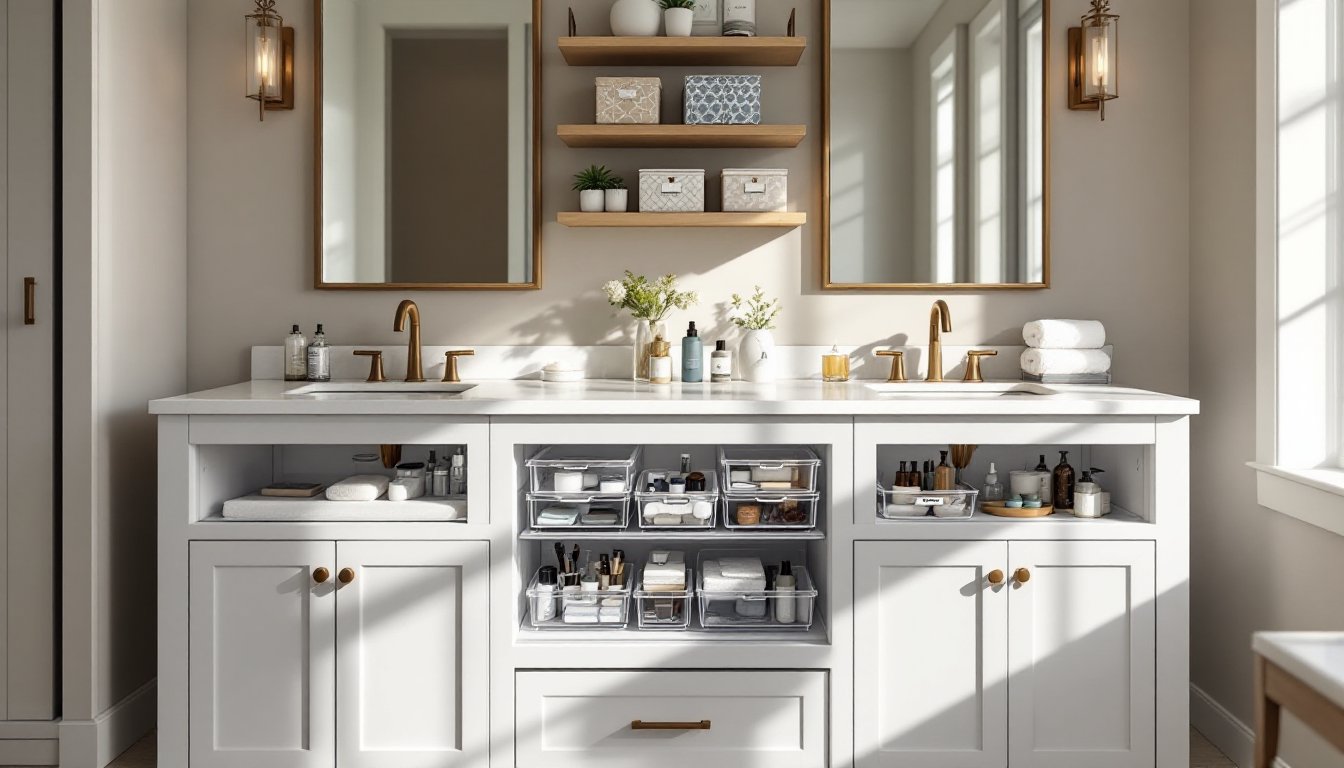
Drawer Dividers (plastic or bamboo) keep small items from sliding around. A typical vanity drawer holds pens, tweezers, scissors, and hair clips, dividers assign each a slot and prevent rummaging.
Stackable Bins and Boxes optimize deep cabinets. Clear acrylic or plastic bins let you see contents without opening them. Dark or opaque bins hide unsightly product packaging. Stack vertically to fill wall height: horizontal stacking wastes overhead space.
Lazy Susans (rotating trays) fit in corner cabinets or under-sink spaces. Spin to reach items at the back without crawling. Use in bathroom storage cabinets where reach is difficult.
Adhesive Hooks and Organizers mount inside cabinet doors. A small magnetic strip holds bobby pins and metal clips. Tension rods create a rail for hanging items, ideal for curling irons or hair products in their original bottles.
Tiered Shelves and Risers double cabinet depth. A 2-tier riser above the existing shelf creates a second level for bottles or boxes, turning one shelf into two without removing items.
Moisture-Resistant Materials matter in humid bathrooms. Avoid cardboard: use plastic or metal bins. Wood shelves work if finished or lined with waterproof shelf liner. Particleboard swells and deteriorates, skip it unless sealed. Melamine or laminated shelves resist moisture better and cost less than solid wood.
Maintain and Refresh Your System
A well-organized cabinet requires periodic maintenance. Every 3–6 months, pull items forward and wipe shelves with a microfiber cloth. Look for leaks, discoloration, or mold, signs of moisture buildup that demand better ventilation or shelf material swaps.
Check expiration dates on medications, sunscreen, and skincare products. Toss anything past its prime (most over-the-counter items last 1–3 years). This clears space and prevents using ineffective products.
If you notice cabinet bottoms warping or particle-board swelling, upgrade to a storage cabinet for bathroom with bathroom cabinet for storage built from plywood (3/4-inch minimum) or metal frames. Water-resistant finishes and sealed edges last longer than stock options.
Season your organization quarterly. After winter, reassess what you actually used. If a product sat untouched for six months, donate or recycle it. This prevents accumulation and keeps the cabinet lean.
For continued organization in small spaces, refresh containers annually. Cracked dividers, broken bins, and faded labels all signal a refresh. Replace them to maintain the system’s efficiency. A quick refresh takes 30 minutes and keeps everything running smoothly.
Conclusion
Effective bathroom cabinet storage combines honest assessment, smart selections, and disciplined organization. Whether installing a new vanity, mounting wall cabinets, or organizing existing space, the fundamentals remain the same: match cabinets to your layout, maximize vertical space, categorize by use, invest in containers, and maintain regularly. The result is a bathroom that functions smoothly, looks uncluttered, and adapts as life changes. A few hours of planning and implementation save years of daily frustration.