Corner Office Storage Solutions: Maximize Space and Minimize Clutter in 2026
A cramped corner in a home office is wasted real estate. Whether someone’s working from home full-time or maintaining a creative workspace, corner office storage is often the difference between a functional desk and a cluttered disaster. Most people overlook these awkward angles, defaulting to a desk tucked against two walls and hoping the mess stays contained. But corners are goldmines for smart storage. With the right approach, floating shelves, custom cabinets, or vertical solutions, a corner transforms into an organized asset. This guide walks through practical corner office storage options that maximize capacity without requiring a contractor or expensive renovation.
Key Takeaways
- Corner office storage can hold 15–25% of an office’s total storage capacity if designed thoughtfully, transforming wasted space into functional assets.
- Floating corner shelves are the quickest and most cost-effective solution for DIYers, costing $50–$200 per shelf and requiring zero floor space.
- Corner cabinets and credenzas provide bulk storage and complete visual organization, with freestanding units being ideal for renters and built-in options maximizing permanent footprints.
- Vertical storage strategies like tall narrow shelving units and pegboard systems triple usable storage capacity without expanding the overall office footprint.
- Proper lighting, clear labeling, and pull-out drawers make corner office storage functional and accessible, preventing items from becoming hidden or lost.
- Start with a simple freestanding cabinet or floating shelves, then expand your corner office storage system as your workspace needs evolve.
Why Corner Office Storage Matters
Corner office storage solves a universal problem: limited square footage. Home offices are shrinking, while work demands, files, supplies, equipment, keep growing. A typical corner, roughly 24 to 36 inches on each side, can hold 15–25% of an office’s total storage if designed thoughtfully.
Clumstered surfaces lead to decision fatigue and lost productivity. When a person can’t find a pen or a file because everything’s stacked haphazardly, work suffers. Strategic corner storage keeps items within arm’s reach but out of sight, creating visual calm. This is especially critical in smaller rooms or open-plan homes where the office doubles as a living space.
Corner storage also prevents dead zones. Conventional furniture arrangements often leave corners as unused gaps. A well-chosen cabinet, shelving unit, or custom installation transforms that dead space into function.
Floating Corner Shelves and Wall-Mounted Options
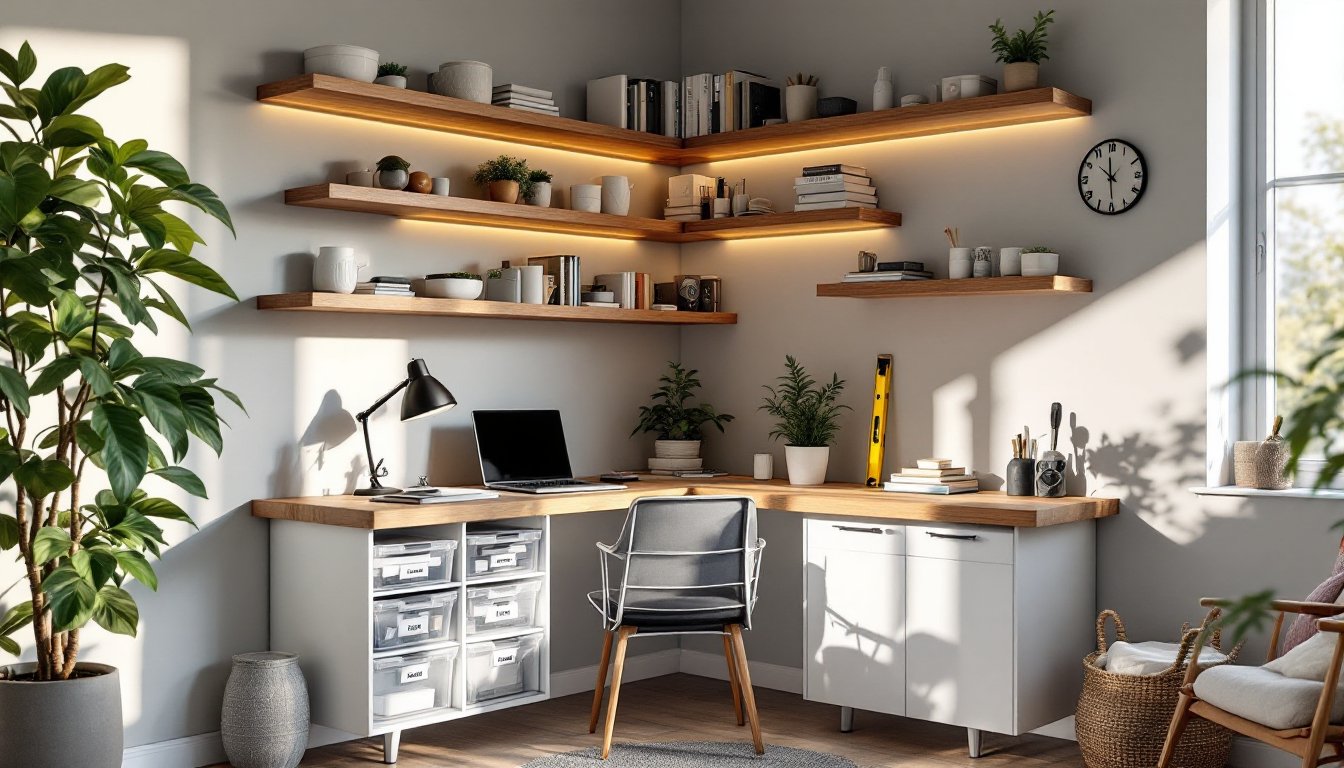
Floating corner shelves are the quickest win for most DIYers. They take up zero floor space, create visual interest, and cost between $50–$200 per shelf depending on material and size.
Installation Basics: Mount shelves into studs (vertical framing members behind drywall) for proper load-bearing. Use a stud finder to locate them, most studs run 16 inches on-center. For an L-shaped corner installation, attach mounting brackets to studs on both walls. Each shelf typically holds 20–40 pounds depending on bracket quality and stud spacing: don’t exceed that without reinforcement.
Material Options: Solid wood shelves (oak, maple, or walnut) cost more but age well. Budget alternatives like painted plywood or engineered wood veneer work fine if sealed properly. Steel or metal brackets add industrial character and cost less than wood-only designs.
Pro Tip: If studs don’t align with the exact corner angle needed, use heavy-duty toggle bolts or drywall anchors rated for the shelf weight, but this only works for lighter loads (under 15 pounds per shelf). For heavier items, relocate to a stud or add a second wall-mounted bracket midway along the shelf.
Spacing: Leave 10–14 inches between shelves for office items. Books need about 11 inches: office supplies and decor need less. Shelves too close together waste capacity.
Corner Cabinets and Credenzas
Corner cabinets hold more volume than shelves and hide clutter completely. They run $200–$1,500+ depending on material and whether they’re stock or custom-built.
Built-In vs. Freestanding Cabinets
Freestanding cabinets are the DIY-friendly choice. A typical corner unit measures 24–36 inches on each side and sits 30–36 inches tall. These are easy to move, require no installation beyond leveling, and don’t demand drywall patches if removed later. Ikea’s PAX, Billy, and cabinet brands like Sauder offer solid mid-range options with adjustable shelves.
Built-in cabinets are permanently installed into studs and drywall, delivering a polished, integrated look. They maximize the corner footprint and can reach ceiling height, tripling storage capacity. The tradeoff: they demand accurate measurements, potentially require permits (check local codes for structural modifications), and need someone experienced with carpentry. A poorly measured built-in is costly to fix.
Assembly & Leveling: Even freestanding units need care. Set a corner cabinet on a shim, thin wood wedges, to level it front-to-back and side-to-side. An unlevel cabinet won’t close properly and puts uneven stress on hinges and shelves. Use a 4-foot level, checking both directions.
Anchoring Safety: If there are kids or pets in the home, anchor tall cabinets to wall studs with L-brackets to prevent tip-over. This is non-negotiable for units over 36 inches tall, it’s a safety code requirement in most jurisdictions.
Vertical Storage Strategies
Thinking vertical triples usable storage without expanding the footprint. Tall, narrow shelving units (18–24 inches wide, 60+ inches tall) fit snugly in corners and keep items visible and accessible.
Tall Shelving Units: Look for 5-shelf or 6-shelf units with adjustable shelves. These range from $80–$400. The benefit of adjustability is huge, users can reconfigure as office needs change. Metal frame units are lighter and more durable than particle board, though they cost more upfront.
Pegboard Systems: A 2-foot × 4-foot pegboard panel, mounted 18–24 inches above a desk, holds pencils, clips, headphones, and small tools without consuming valuable desk real estate. Paint it to match the room, add pegboard hooks (50 cents each), and it becomes both functional and visual. This works exceptionally well in corners where natural light hits.
Wall Grids and Magnetic Strips: Over-the-wall grid systems and magnetic knife strips (yes, they work for office supplies) cost $15–$50 and install in minutes with adhesive strips. These suit quick-access items: chargers, cords, small tech gadgets. Avoid overloading adhesive-mounted systems, stay under 10 pounds per grid.
Corner-Specific Racks: Some wall-mounted racks are designed specifically for 90-degree angles, using both walls equally. These often hold filing or baskets and run $100–$300. Look for models with adjustable shelves and weight ratings posted clearly.
Making the Most of Your Corner Office Layout
A corner is only useful if it complements the whole office layout, not fights it. Start by evaluating what already lives in or around the corner.
Traffic & Reach: If the corner is behind a door swing, tall cabinets create a traffic hazard. Shelves are safer. If it’s an active work zone, store frequently used items at eye level (roughly 48–60 inches high) and infrequent items higher or lower.
Lighting: Corners often lack direct light. Add a bias lighting strip (warm LED, 3000K color temp) above shelves to illuminate contents and reduce eye strain when reading labels. This is especially useful for filing and small items that are hard to find in shadow.
Depth & Accessibility: Deep shelves (14+ inches) waste space if only the front is reachable. Use pull-out drawers or sliding baskets within cabinets to bring back items forward. A simple wood or wire drawer slides in and out and costs $20–$60.
Aesthetic & Scale: A corner unit shouldn’t dwarf the room or crowd the desk. Measure the wall dimensions first. A 36-inch-wide cabinet in a small 10×10 office is overkill: a 24-inch unit or tall narrow shelves scale better. Paint or stain to match existing trim, this ties the storage into the room instead of making it look like an afterthought.
Labeling & Containment: Even the best corner storage fails if users can’t find anything. Use clear bins for categories (cables, tax documents, supplies). Label every bin. This takes 10 minutes but saves hours of rummaging.
Conclusion
Corner office storage doesn’t require demolition or design skills. A few thoughtful choices, floating shelves for visibility, a corner cabinet for bulk items, or vertical racks for quick access, unlock space most people ignore. The best solution depends on the room’s layout, the types of items being stored, and the homeowner’s comfort with installation. Start with a freestanding cabinet or floating shelves, then expand as needs evolve. A well-organized corner transforms a cramped office into one that feels spacious and productive.