
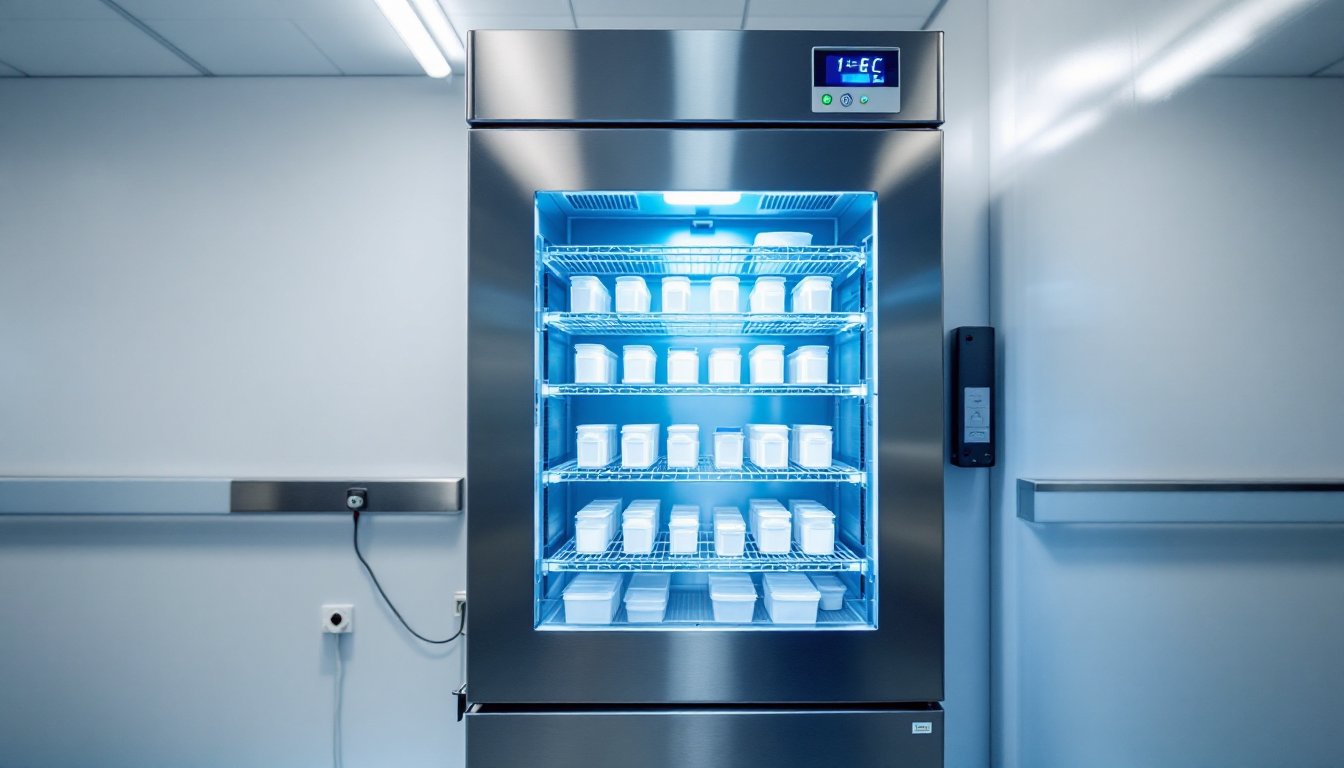
Blood Storage Refrigerators: Essential Equipment for Modern Healthcare in 2026

Blood storage refrigerators are specialized medical devices that preserve blood products and maintain their viability for transfusions and clinical use. These units are far more than standard refrigerators, they’re engineered with precise temperature controls, backup systems, and alarms to prevent spoilage and ensure patient safety. Healthcare facilities, blood banks, hospitals, and transfusion centers depend on blood storage refrigerators as critical infrastructure. With advances in monitoring technology and regulatory standards, modern blood storage solutions have become smarter, more reliable, and increasingly essential as demand for safe blood products grows in 2026. Understanding how they work and what features matter helps facilities make informed purchasing and maintenance decisions.
Key Takeaways
- Blood storage refrigerators maintain precise temperatures between 1–6°C for most blood products, with even ±1°C fluctuations potentially compromising safety and shelf life.
- Modern blood storage refrigerator systems include multiple safety layers such as dual thermometers, backup power, audible/visual alarms, and digital data logging to ensure FDA and AABB compliance.
- Temperature monitoring is critical: every unit must have high and low temperature alarms set to trigger at 6.5°C and 0.5°C, with advanced models sending SMS or email alerts to staff during off-hours.
- Facility selection of a blood storage solution requires assessing capacity, space location away from heat sources, dedicated electrical circuits, and third-party validation of temperature uniformity before clinical use.
- Different blood products have unique storage requirements—red blood cells last 35–42 days at cold temperatures, platelets only 5–7 days at room temperature, and frozen plasma extends to 1–2 years, all preserved safely in purpose-built refrigerators.
- Continuous staff training, 24/7 coverage assignments, and regular maintenance of door seals and backup systems are essential to prevent product loss and maintain operational reliability.
What Is a Blood Storage Refrigerator?
A blood storage refrigerator is a dedicated medical refrigerator designed exclusively for the storage of blood components and blood products. Unlike household or laboratory refrigerators, these units are purpose-built to maintain exact temperature ranges and comply with strict regulatory standards set by organizations such as the FDA, AABB (American Association of Blood Banks), and regional health authorities.
Blood storage refrigerators typically hold whole blood, red blood cells (RBCs), platelets, plasma, and cryoprecipitate. Each product has specific storage requirements. The refrigerator preserves the integrity of these components, preventing bacterial growth, clot formation, and cellular degradation. They come in various sizes, from compact bedside units holding a few units of blood to large walk-in models serving entire hospital networks, and feature reinforced insulation, stainless steel construction, and sealed containment systems. These refrigerators are regulated medical devices and must meet certification requirements before installation in any healthcare setting.
Critical Temperature and Storage Requirements
Temperature precision is non-negotiable in blood storage. Most blood products are stored at 1–6°C (34–43°F), which slows cellular metabolism without freezing the product. This narrow range is critical: too warm and bacteria multiply: too cold and ice crystals form, damaging cells and reducing transfusion effectiveness.
Red blood cells in standard storage solution can remain viable for 35–42 days at these temperatures, depending on the anticoagulant used and whether the product is leukocyte-reduced. Platelets, by contrast, require warmer storage (20–24°C, or 68–75°F) and remain viable for only 5–7 days due to higher risk of bacterial contamination at room temperature. Plasma and cryoprecipitate are frozen and stored at −18°C (0°F) or colder, with viability extending to 1–2 years depending on the product.
Blood storage refrigerators must maintain these temperatures consistently, 24/7. Temperature fluctuations of even ±1°C can shorten shelf life or compromise product safety. Facilities track temperature logs continuously, and many units now include digital data logging that sends alerts if readings drift outside acceptable ranges. During power outages, backup generators or liquid nitrogen systems protect inventory and prevent catastrophic product loss.
Key Features and Safety Standards
Modern blood storage refrigerators incorporate multiple safety layers to prevent product loss and ensure compliance with medical device standards. AABB, FDA, and ISO 9001 certification verify that a unit meets rigorous design, manufacturing, and quality-control benchmarks.
Units include multiple thermometers, typically one display thermometer and one recording thermometer, so staff can verify temperature independently. Shelving is adjustable, with slotted or wire designs that allow air circulation around stored products. The door seal is critical: a faulty gasket can allow temperature drift, so inspections and seal replacements are routine maintenance tasks. Refrigerators must be frost-free to prevent ice buildup, which blocks air circulation and creates temperature dead zones.
Backup power systems are essential. Many facilities pair their blood storage refrigerator with a backup generator capable of supporting at least 24–48 hours of operation. Some units include battery-operated alarm systems that function during power loss, alerting staff immediately. Walk-in models may use glycol-based cooling loops or liquid nitrogen backup systems for extended protection.
Access controls have become more sophisticated. Newer models include PIN locks or RFID card readers to restrict access, preventing unauthorized removal of products and maintaining an electronic audit trail. This is especially important in hospitals tracking blood inventory across multiple units.
Temperature Monitoring and Alarm Systems
Temperature monitoring is the backbone of safe blood storage. Every unit must have high and low temperature alarms that trigger if readings drift outside the acceptable range, typically set to alarm at 6.5°C and 0.5°C to catch problems before product damage occurs.
Alarm systems use audible alerts (85+ decibels, per standards) and visual indicators (LED lights or screen notifications). Many modern units send SMS or email alerts to designated staff, pagers, or facility management systems, ensuring response even if alarms sound during off-hours. Some advanced models integrate with facility-wide monitoring networks, centralizing alerts from multiple refrigerators into a single dashboard.
Data logging is increasingly expected. Units record temperature every 30 seconds to 5 minutes and store minimum 30 days of history. During inspections or investigations into product loss, this data proves compliance or reveals problems. Digital logs can be downloaded directly to USB drives or synced to hospital IT systems for archiving and compliance documentation.
Choosing the Right Blood Storage Solution for Your Facility
Selecting a blood storage refrigerator depends on several factors: facility size, blood inventory needs, available space, budget, and regulatory environment.
Smaller urgent care clinics or outpatient phlebotomy centers might use compact benchtop units holding 20–50 units of blood. These are affordable, require minimal electrical infrastructure, and fit in confined spaces. Mid-sized hospitals often deploy larger upright models (4–10 cubic feet) holding 200–300 units, positioned in blood banks or transfusion services. High-volume facilities like regional blood centers or major trauma hospitals require walk-in refrigerators with separate backup cooling systems and redundant alarms.
When evaluating units, verify AABB accreditation and FDA 510(k) clearance. Request third-party validation of temperature uniformity, some refrigerators have “hot spots” near the door or cold zones at the back. Ask about warranty coverage (typically 1–3 years for parts and labor, with extended options available) and the manufacturer’s commitment to parts availability. Long-lead items like replacement compressors can cause extended downtime if not stocked locally.
Capacity and Space Considerations
Capacity planning requires honest assessment of usage patterns. A facility should size the refrigerator to hold peak inventory plus 10–20% buffer, not maximum theoretical need. Overstuffing compromises air circulation and creates temperature gradients.
Layout matters. The refrigerator should be located away from direct sunlight, heat sources (ovens, autoclaves), and high-traffic areas where the door opens frequently. Dedicated electrical circuits (hospital-grade, per National Electrical Code, or NEC) are mandatory, never share a circuit with other medical equipment. In disaster-prone regions, consider placing the unit on an elevated platform to protect it from flooding.
Installation and validation are not DIY tasks. The manufacturer typically performs on-site commissioning, testing temperature uniformity, alarm function, and data logging before clinical use. Staff training on operation, troubleshooting, and emergency protocols is non-negotiable. Most facilities assign a primary and secondary contact for refrigerator issues, ensuring coverage 24/7.
Conclusion
Blood storage refrigerators are critical infrastructure in modern healthcare, protecting one of the most valuable and perishable products in medicine. Precise temperature control, redundant alarm systems, and continuous monitoring ensure that blood products remain safe and effective from the moment of collection to transfusion. Selecting the right unit, one that fits facility capacity, meets regulatory standards, and includes robust backup systems, directly impacts patient outcomes and operational efficiency. In 2026, as blood demand continues rising and regulatory scrutiny intensifies, investing in validated, well-maintained blood storage solutions is non-negotiable for any facility providing transfusion services.