Small Home Office Floor Plan: 6 Layouts That Maximize Every Square Foot
Remote work has turned spare bedrooms, closets, and corners into functional offices. But crammed into a small space, a desk can feel suffocating rather than productive. A smart small home office floor plan isn’t about fitting furniture into unused corners, it’s about choosing layouts that match the actual dimensions and workflow needs of the space. Whether converting a 60-square-foot bedroom nook or squeezing a desk into a studio apartment, the right arrangement makes all the difference between an awkward afterthought and a space that actually works.
Key Takeaways
- Measure your space before purchasing furniture—know your room’s dimensions, ceiling height, window placement, and structural constraints to create a viable small home office floor plan.
- A small home office requires non-negotiable essentials: a proper desk (48–60″ wide, 24–30″ deep), an ergonomic chair with lumbar support, organized storage, quality lighting, and hidden cable management.
- Corner desks work well in bedrooms and studios by anchoring the office zone in one area, while wall-mounted or floating desks save 18–24″ of floor space and create an airy, larger-feeling environment.
- When installing a floating desk, secure it to wall studs using heavy-duty brackets rated for 100+ pounds, mount the desk 12–15″ above baseboards to avoid knee strikes, and use three brackets for desks wider than 48″.
- Prioritize natural light positioning relative to your monitor to reduce glare and eye strain, and supplement with desk lamps and backlighting behind your screen for optimal visibility and comfort.
Understanding Your Space Constraints
Before pulling a Pinterest mood board or shopping for a standing desk, measure the actual footprint. Grab a tape measure, a notebook, and note the room’s length, width, ceiling height, and the location of doors, windows, outlets, and HVAC vents. Check for any structural elements, a load-bearing wall, a closet intake, or an angled ceiling, that’ll shrink your usable space.
Also map out natural light. Glare on a screen kills productivity, and poor lighting causes eye strain and headaches. Windows are assets, but their position relative to your monitor matters. North-facing windows provide consistent, soft light: south-facing ones blast heat and glare unless you add blackout shades or light-filtering roller blinds.
Measure your future furniture before buying. A standard desk is 48″ to 60″ wide, 24″ to 30″ deep. An ergonomic office chair is typically 26″ to 30″ wide and needs clearance to recline. If your room is 10′ × 8′, those measurements dictate what layouts are actually viable. Don’t guess, write it down.
Essential Elements Every Small Office Needs
A functional small office isn’t a Pinterest moment: it’s a workspace that supports your actual job. Every layout needs these non-negotiable pieces:
A desk with adequate surface area. Not a bar-height bistro table, a real work surface at least 24″ to 30″ deep and 48″ wide if possible. If space forces a smaller footprint, opt for a wall-mounted or floating desk (more on that below). The desk should be 30″ to 32″ tall to align with seated elbow height when using a standard chair.
An ergonomic chair. A cheap task chair fails your back and shoulders within weeks. Invest in one with lumbar support, adjustable height and armrests, and a five-wheel base. Avoid oversized lounge chairs, they waste floor space and encourage slouching.
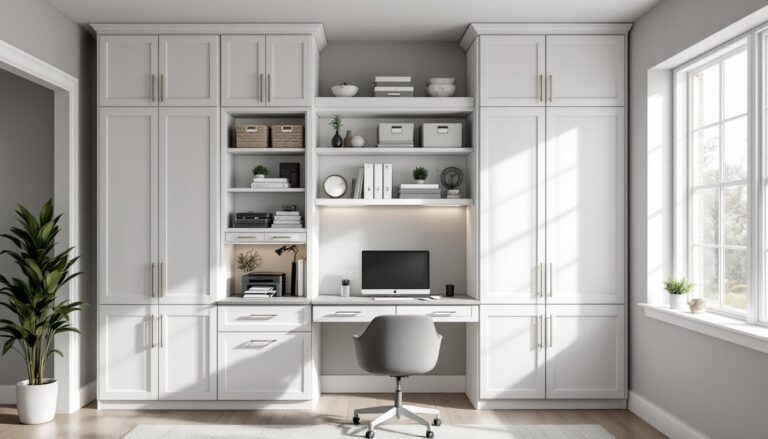
Storage that keeps clutter off the desk. Open shelves, filing cabinets, or wall-mounted cubbies prevent papers and supplies from piling up on your work surface. In a small office, every visible item reduces perceived space.
Proper lighting. Overhead ceiling lights create shadows and glare. Add a desk lamp (LED for energy efficiency) and if needed, backlighting behind your monitor to reduce eye strain. Natural light is ideal, but lamps are non-negotiable.
Cable management. Visible cords clutter a tiny space visually and physically. Use cable raceways, clips, or cord sleeves to route power and data cables along the wall or underside of the desk. A few zip ties cost pennies and earn back square footage in visual clarity.
The Corner Desk Layout
Best For: Compact Bedrooms and Studios
A corner layout shines in bedrooms where a bed occupies the opposite wall and in studio apartments where living and working zones need visual separation. If the room is 12′ × 10′ with a window on one side, anchoring a desk in the opposite corner leaves the window area open and the room feeling less crowded.
The Wall-Mounted and Floating Desk Approach
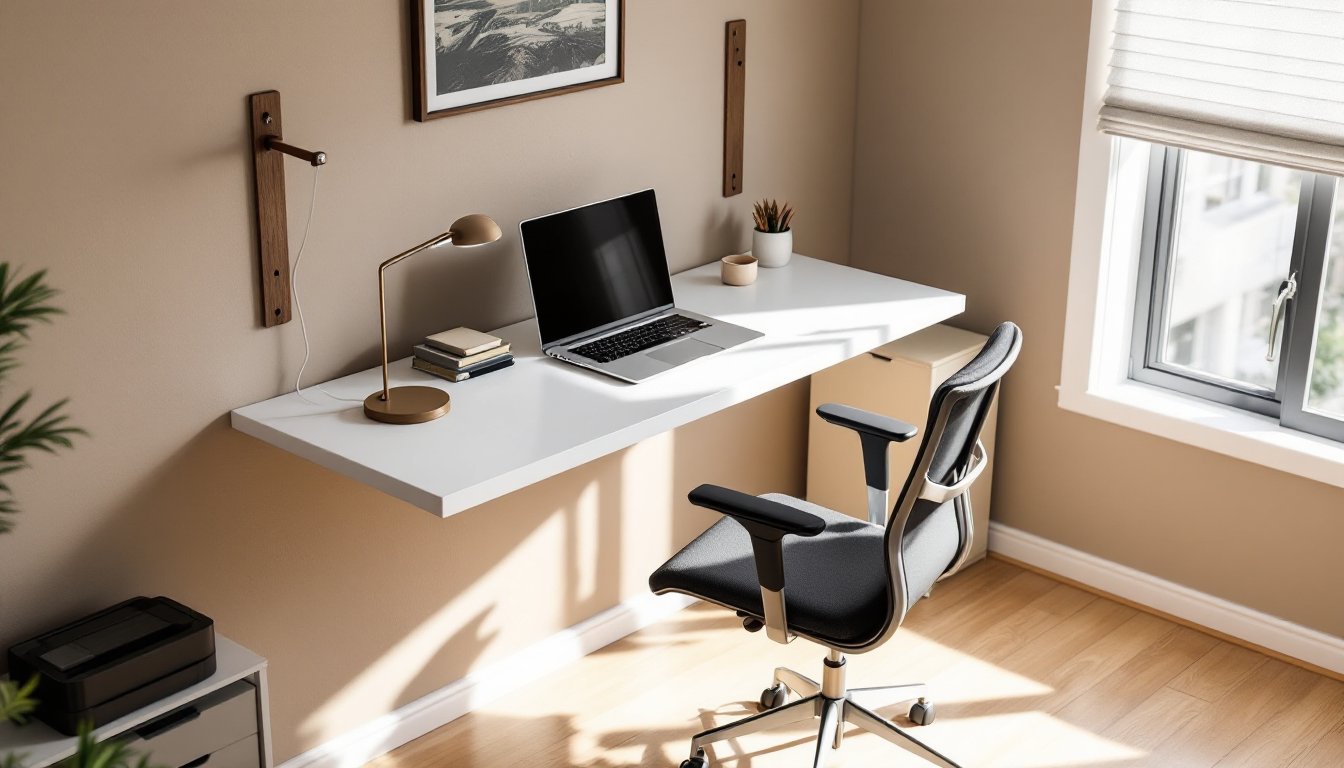
When every inch counts, a wall-mounted or floating desk is the space-saving solution. Instead of legs taking up floor space, the desk is bolted directly to wall studs, dangling above the ground. The visual lightness also makes a tiny room feel bigger.
Setup essentials: Locate the wall studs using a stud finder (about $15–30). Most studs are 16″ on center, meaning 16 inches apart. Use heavy-duty brackets, at least L-shaped steel brackets rated for 100+ pounds, bolted into the studs with 3/8-inch lag bolts or through-bolts. A floating desk can hold as much weight as a traditional one if anchored correctly. The desk itself is usually a solid-core plywood top or hardwood board measuring 36″ to 48″ wide and 24″ to 30″ deep. Apply stain or paint to match the room’s aesthetic.
Installation: Use a level to ensure the top is perfectly horizontal. Mark the stud locations with a pencil and a combination square. Drill pilot holes to avoid splitting studs, then install bolts and brackets. Check that the desk is secure by applying downward pressure before mounting a monitor or keyboard.
Electrical access: Mount an outlet strip to the underside of the desk or use a power strip with a surge protector. Route cables behind or underneath so they’re hidden.
Space-Saving Benefits and Setup Tips
A floating desk can save 18″–24″ of floor space compared to a legged desk, which matters in a 9′ × 9′ office. It also creates an open feeling, someone walking into the room sees unobstructed floor, making the space feel larger. The negative space underneath allows a small filing cabinet or shelving unit to fit, stacking storage vertically.
Setup tips: If mounting above existing baseboards, plan so the desk sits at least 12″ to 15″ above the baseboard to avoid knee strikes when sitting. Secure a power strip to the wall or underside of the desk and use adhesive cable clips to manage wires. For extra stability on longer desks (48″ or wider), use three brackets instead of two, one in the center and one on each end. Test the desk’s wobble with a full load before calling the job done.
Conclusion
A small home office floor plan succeeds when it matches the room’s actual dimensions and the work that happens there. Corner desks and floating options are popular because they work, they preserve floor space, support ergonomics, and create a distinct work zone without feeling cramped. Start with measurements, prioritize desk depth and chair clearance, and don’t skimp on lighting or storage. The best layout is the one you’ll actually use every day without backache or clutter creeping in by noon.