Laundry Storage Solutions That Transform Your Mudroom or Laundry Room in 2026

A cluttered laundry room defeats the purpose of efficiency. Piles of detergent bottles, fabric softener, cleaning rags, and overflow from the dryer eat up floor space and make the weekly wash day feel chaotic. Smart laundry storage solutions organize that chaos while maximizing the square footage you already have. Whether working with a dedicated laundry room or cramped mudroom corner, the right approach combines accessible vertical storage, strategic shelving, and functional zones. This guide walks through wall-mounted options, freestanding units, functional organization strategies, and space-saving ideas designed for real homes, not magazine spreads.
Key Takeaways
- Smart laundry storage solutions use vertical shelving and functional zones to maximize space and eliminate the chaos of cluttered laundry rooms.
- Wall-mounted cabinets and shelves installed on studs keep detergent, fabric softener, and cleaning supplies within arm’s reach without sacrificing floor space.
- Organize laundry storage by workflow zones—pre-laundry sorting, wash-and-dry access, and folding areas—so supplies live exactly where they’re used.
- Freestanding units like tall bookcases and metal racks work in rental spaces or rooms where wall studs are scarce, offering flexible storage without permanent installation.
- Small laundry rooms benefit from floor-to-ceiling shelving, over-the-door organizers, stackable containers, and multipurpose furniture to maximize every inch of available space.
- Effective laundry storage combines accessible storage types, clear labeling, and a workflow-based layout that cuts chore time and prevents weekly laundry day overwhelm.
Wall-Mounted and Vertical Storage Options
Shelving Systems and Wall Cabinets
Wall-mounted storage is the workhorse of laundry organization. It keeps supplies within arm’s reach without sacrificing floor space, critical in rooms where a washer, dryer, and utility sink already compete for real estate.
Standard floating shelves (made from solid wood or composite board, typically 8–12 inches deep) handle light to medium loads: detergent boxes, stain treatments, and lint rollers. Install them using heavy-duty wall anchors or, better yet, studs. Find studs with a stud finder and use 2½-inch lag bolts for shelves 24 inches or wider: this prevents sagging over time. Space shelves 12–18 inches apart vertically to accommodate bottles and folded supplies. For laundry rooms with painted drywall (not tile), locate studs along the perimeter, most homes space studs 16 inches on-center.
Wall-mounted cabinets with doors offer dust protection and a cleaner look. Most DIYers install pre-made cabinets from box stores (typically 24–36 inches wide, 12–18 inches deep) using the same stud-mounting method. Measure height carefully: position lower cabinets 36–48 inches from the floor so you can reach inside without bending awkwardly. Upper cabinets should sit 18–24 inches above lower ones, leaving clearance for your head when opening doors. Drill pilot holes first to prevent splitting the stud or drywall, then drive lag bolts with a socket wrench.
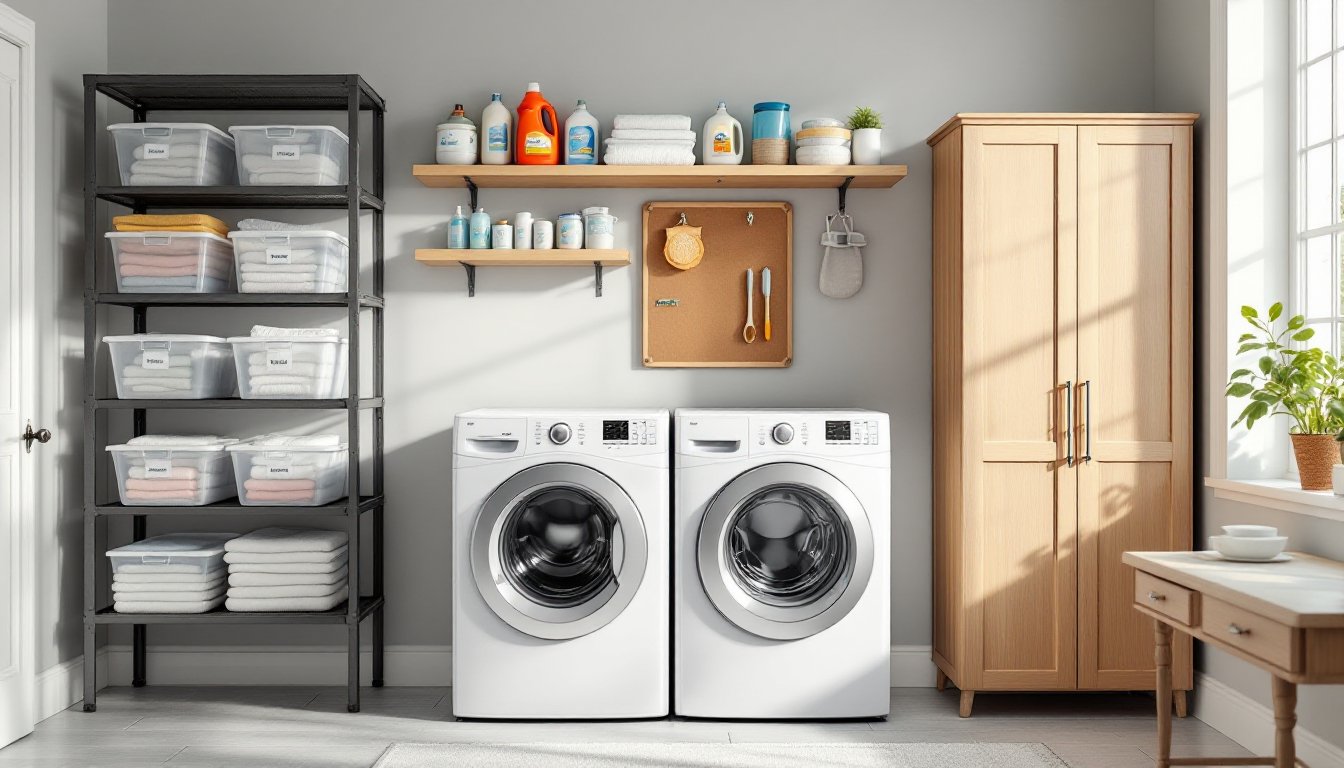
Metal shelving units (the industrial-style racks sold at hardware stores) require no stud hunting, they bolt to the wall or stand freely. They’re affordable, adjustable, and rated for heavier loads (100–200 lbs per shelf). Stagger shelf heights to accommodate tall bottles, small containers, and baskets. For damp laundry rooms, spray-coated steel resists rust better than bare metal.
Install pegboard sections to hang small items: clothespins, measuring cups for detergent, lint brushes, and small baskets. Use pegboard anchors appropriate to your wall type, toggle bolts for drywall, standard anchors for studs. The flexibility to rearrange hooks makes pegboard ideal when your storage needs shift.
Freestanding Storage Units and Furniture
Open and Closed Shelving Solutions
Freestanding furniture works when wall studs are scarce or you rent. These units slide into gaps, corners, or alongside appliances without permanent installation.
Tall narrow bookcases (36–48 inches tall, 24–30 inches wide) fit snugly beside washers or in corner dead zones. Choose sturdy, shallow designs, industrial metal shelves, real wood, or high-quality composite, that won’t topple if someone tugs a basket or leans on a shelf. Anchor tall units to wall studs with L-brackets if children are in the home: falling furniture is a serious hazard.
Open shelving units expose everything, which suits organized people but demands consistent tidiness. Use matching containers, clear plastic bins, woven baskets, or labeled boxes, so the visual clutter stays contained. Group like items (bleach and oxygen brighteners together, detergent pods in one basket, drying supplies in another) so anyone in the household knows where to look. Open shelves cost less and allow quick access, ideal if you wash frequently.
Closed cabinet storage (kitchen-style cabinets, linen closets, or purpose-built laundry cabinets) hides unsightly bottles and clutter. The trade-off: you can’t see contents at a glance, so good labeling is essential. Dedicate one shelf to each category (delicates, heavy-duty, stain removers, fabric care) and print labels or use a label maker. Closed units also regulate temperature better, protecting detergents from heat-sensitive degradation in warm climates.
Standalone hamper systems with built-in shelving combine sorting and storage. Some models feature three or four fabric sorter bins mounted under a wooden frame with a shelf on top for folded items, a neat all-in-one approach that works well in mudrooms serving multiple purposes.
Organization by Function and Laundry Stage
Smart organization mirrors the laundry workflow. Create zones so supplies and tools cluster where they’re used.
Pre-laundry zone: Position a large hamper or rolling sorter cart (multi-compartment, typically 24–30 inches tall) near the entry. Use separate bins for darks, lights, and delicates so sorting happens upfront, not during the wash cycle. A wall hook or hanging bar above the hamper holds a spray bottle for stain pretreatment and a lint roller.
Wash and dry zone: Mount shelving directly above or beside the washer and dryer at eye level (48–60 inches high) for detergent, fabric softener, and dryer sheets. Keep these within one arm’s reach to avoid trips back and forth. A small shelf or ledge on top of the dryer (if heat won’t damage it) holds a folding caddy or lint trap cleaning tools. Some washers and dryers have built-in dispensers or cubbies: use those first before adding external storage.
Folding and sorting zone: Reserve clear counter or table space for folding: folding directly into laundry baskets saves energy and floor space. Position a tall, open shelf near this zone for clean, folded items sorted by person or room. Label baskets or use color-coded bins so household members can grab their own clean laundry and put it away themselves.
Specialty storage: Designate one bin or basket for items that need hand-washing, another for delicates awaiting the drying rack, and a third for items pending repair or stain treatment. Visibility prevents forgotten loads and reduces mildew risk.
This tiered approach transforms a laundry room into a workflow, not just a storage dumping ground.
Space-Saving Ideas for Small Laundry Rooms
Tight quarters demand vertical thinking and multipurpose furniture.
Go tall, not wide: Install shelving from floor to ceiling (use wall studs or heavy-duty anchors) to capture wasted overhead space. A 4-foot-tall closet corner can hold 8–10 shelves stacked vertically, each 12 inches deep. Dedicate top shelves to seasonal items (winter coat stain remover, summer sunscreen for laundry accidents) and lower shelves to frequently used supplies.
Magnetic strips and hooks: Stick magnetic strips to the side of a metal washer to hold metal lint-trap cleaning brushes, measuring spoons, or small scissors. S-hooks hung from a PVC pipe or rod mounted between studs create hanging space for air-dry bags, clothespin holders, and small baskets without eating floor area.
Stackable containers with labels: Clear plastic bankers’ boxes (11–27 inches tall) and labeled drawer organizers fit under shelves or in closet corners. Vacuum-seal bags shrink fabric supplies and spare towels down to a fraction of their original volume, useful for stashing backup detergent or seasonal items.
Fold-down or pull-out shelves: If you have one wall with a washer and dryer side by side, a narrow fold-down shelf (18–24 inches wide) mounted at waist height adds temporary folding or work surface without permanent footprint. Hinged shelves require mounting to studs and a simple piano hinge: a 24-inch shelf costs $40–80 plus hardware.
Over-the-door and inside-door storage: Mount a shoe organizer (fabric pockets, 36–60 inches tall) on the inside of a laundry room or mudroom door. Toss dryer sheets, clothespins, wool dryer balls, or small cleaning supplies into the pockets. It’s invisible when the door closes and frees up shelf real estate.
Corner shelving units: Triangular corner shelves fit snugly into unused corners, and swivel lazy-Susan-style turntables maximize corner cabinet access.
Conclusion
Effective laundry storage isn’t about fancy furniture, it’s about matching storage type to available space and your family’s workflow. Start by auditing what you store: detergent, fabric care products, cleaning tools, hampers, and fold-and-put-away zones. Choose wall-mounted shelving if studs are present and space is tight: opt for freestanding units if flexibility or renting restricts permanent installation. Organize by function so supplies live where they’re used. For cramped rooms, go vertical, use multipurpose furniture, and label everything. A well-organized laundry room cuts weekly chore time and prevents the chaos that makes laundry day feel overwhelming.