LEGO Storage Solutions That Keep Your Bricks Organized in 2026

Anyone who’s stepped on a stray LEGO brick knows the pain, literally. But loose bricks scattered across floors and shelves are just the surface of a bigger problem: a disorganized collection makes building harder, not easier. Whether someone has a few hundred pieces or a sprawling collection spanning decades, the right LEGO storage solution can transform chaos into efficiency. This guide walks through practical container options, specialized storage systems, and organization strategies that actually save time and frustration. From clear plastic bins to purpose-built LEGO storage, there’s a solution that fits every collection size and budget.
Key Takeaways
- Organized LEGO storage solutions save time during builds by allowing builders to locate specific pieces in seconds rather than sifting through jumbled collections.
- Clear plastic bins and drawers are the most affordable and practical LEGO storage options, with transparency enabling quick searches and stackable designs fitting into any space.
- Sorting by color, piece type, set, or a hybrid approach determines building efficiency—choose one method and maintain consistency rather than switching systems frequently.
- Proper LEGO storage protects collection value, prevents damage like cracks and discoloration, and maximizes space efficiency, especially important in smaller homes or apartments.
- Specialized LEGO storage systems like modular racks offer customization as collections grow, with wall-mounted shelving providing both organization and display appeal for curated collections.
- Regular quarterly maintenance of your LEGO storage system keeps pieces filed correctly and accommodates new sets and changing preferences.
Why LEGO Organization Matters More Than You Think
A chaotic LEGO collection isn’t just messy, it’s inefficient. Digging through a pile of jumbled bricks wastes time on every build, and duplicate hunting becomes a Sisyphean task. More importantly, loose bricks invite damage. Stepped-on pieces crack, colors fade under direct sunlight, and small parts vanish into household crevices. Organized storage prevents all of this.
When bricks are sorted by color, size, or set, building becomes faster and more enjoyable. A builder can grab a specific piece in seconds instead of sifting through hundreds. This is especially critical for complex models or when multiple people share a collection. Also, organized storage protects the value of expensive sets and rare minifigures. Collectors know that condition and completeness directly affect resale value, and proper storage maintains both.
Proper LEGO storage also maximizes space efficiency. A well-organized collection takes up a fraction of the room that chaotic piles demand. For families in smaller homes or apartments, this is a real benefit. The upfront effort of sorting and containerizing pays dividends every single time someone sits down to build.
Container Options: Finding the Right Storage for Your Collection
The container you choose depends on collection size, available space, and how often the collection gets accessed. Here’s what works and why.
Clear Plastic Bins and Drawers
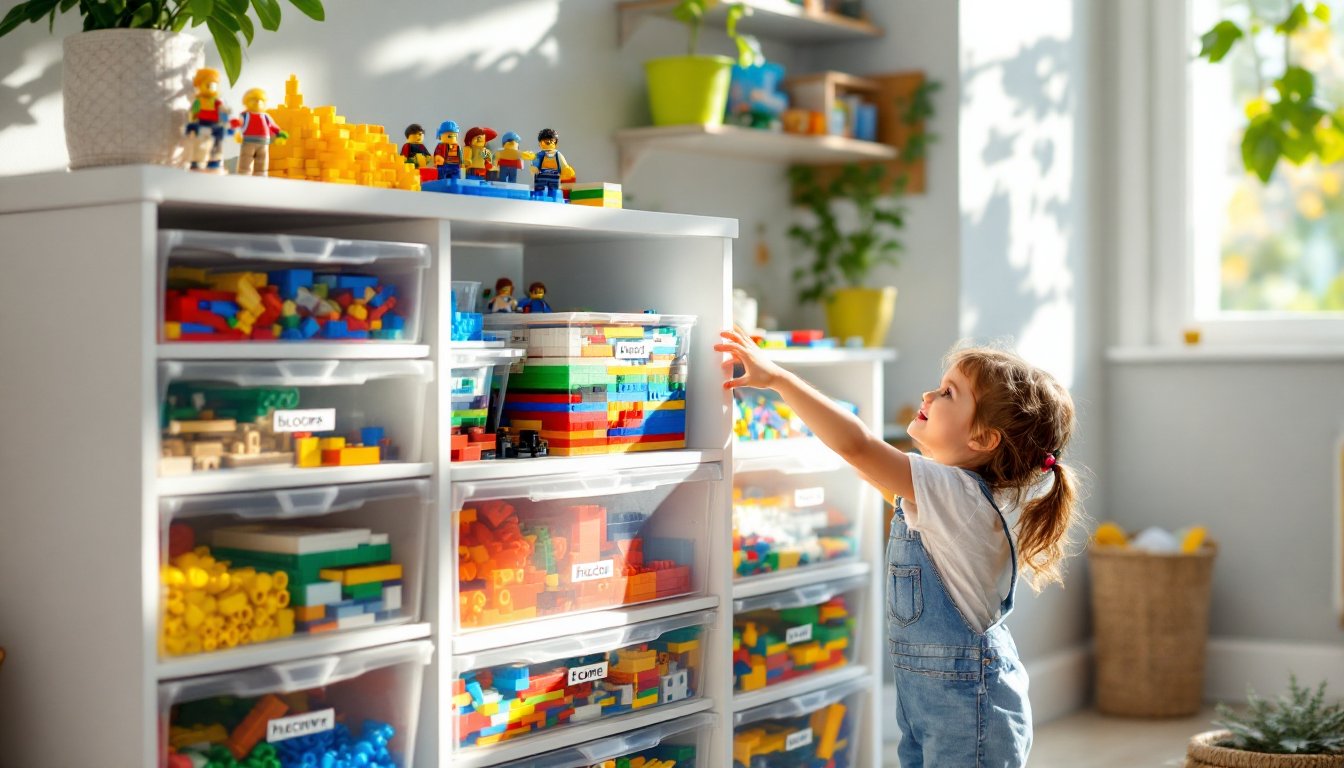
Clear plastic storage bins (typically 12–66 quart capacity) are the workhorses of LEGO storage. Their transparency means builders can see contents without opening them, saving time when hunting for a specific color or piece type. Standard plastic storage containers with latching lids (like Rubbermaid or similar brands) are affordable and stackable, making them ideal for collections that need to fit into closets or under beds.
For smaller collections or sorting by color, clear plastic drawer organizers with multiple compartments work well. These stack vertically and let builders customize compartment sizes for different piece types. A 14–20 compartment drawer typically costs $8–15 and keeps small pieces like connectors and minifig accessories from getting lost. The downside: they take up drawer or shelf space and don’t scale well for massive collections.
One practical tip: label bins clearly, whether by color, piece type, or set number. Adhesive labels or a label maker prevent the frustration of opening unmarked containers. For long-term storage, ensure containers are clean and completely dry before sealing: moisture invites dust and potential mold growth.
Specialized LEGO Storage Systems
Official LEGO storage solutions (like the LEGO Brick Drawer or LEGO storage boxes) are engineered specifically for bricks. These often include modular drawer inserts that snap together, allowing builders to customize organization as their collection grows. The durability is excellent, but the cost is higher, expect $40–80+ depending on size and configuration.
Modular storage racks with clear containers let builders expand incrementally. Systems like these work well in dedicated playrooms or hobby spaces where aesthetics matter. Stacking multiple units creates a display-like effect while keeping bricks organized and accessible.
For display-focused storage, wall-mounted shelving with clear containers combines organization with visual appeal. This approach works best if the collection includes completed sets or rare minifigures worth showcasing. A simple wall-mounted shelf unit ($30–80) paired with clear containers keeps bricks accessible while freeing up floor and furniture space.
Consider space constraints when choosing a container type. A builder with limited floor space might prefer vertical storage, tall, narrow shelving or stacked drawers. Families with dedicated playrooms can use wider, lower bins that kids can access independently. The best choice fits the actual space and daily usage patterns, not just the collection size.
Organization Strategies That Actually Work
Choosing the right container is half the battle: organizing the contents is the other half. Here are strategies that reduce frustration and speed up building:
Sort by color. This is the most intuitive approach for casual builders and kids. Each container holds one color family (reds, blues, greens, etc.), making it fast to grab the exact shade needed. This method works well for small to medium collections and mixed-set builders who aren’t focused on keeping official sets intact.
Sort by piece type. Advanced builders often organize by bricks, plates, slopes, connectors, and specialty pieces. This requires more initial sorting work but pays off for complex projects where finding the right slope angle or connector style matters. Reserve compartments for minifig parts, torsos, and heads, these are small and easy to lose.
Sort by set. Collectors who want to preserve original sets intact can store each set’s pieces separately. Use gallon-sized resealable bags or small bins labeled with set numbers or names. This protects the set’s value and makes rebuilding the original model straightforward. The tradeoff: it’s less efficient for mixed-set building and requires more container space.
Hybrid approach. Many builders combine methods. Keep frequently used pieces (basic bricks, plates, common slopes) sorted by color for daily building. Store specialty pieces (gears, technic elements, rare colors) by type. Reserve sealed containers for complete sets. This balances accessibility, preservation, and efficiency.
Whatever system gets chosen, consistency matters far more than perfection. If a builder sorts by color one week and by type the next, the system breaks down. Spending 20 minutes establishing a clear sorting rule before filling containers saves hours of confusion later.
Maintenance is real. Periodically revisit the system, pieces migrate, new sets arrive, and preferences change. A quarterly 10-minute audit to move misfiled pieces back where they belong keeps everything running smoothly. This is especially important in households where multiple people build.
Conclusion
The right LEGO storage solution combines practical containers with a consistent organizational system. Whether using clear plastic bins, specialized LEGO storage, or a hybrid approach, the goal is the same: make building faster, protect the collection, and maximize space. Start with the sorting method that matches how the collection gets used, invest in containers that fit the space, and stick with the system. A well-organized LEGO collection transforms building from frustrating rummaging into pure creativity.