Small Bedroom Storage Hacks: 7 Clever Solutions That Transform Your Space in 2026
A small bedroom doesn’t have to feel cluttered. The right storage solutions can double usable floor space and make daily life easier without requiring a renovation or major budget. Whether dealing with a studio apartment, a kid’s room, or a modest guest bedroom, smart storage hacks unlock hidden potential. This guide walks through practical, buildable options, from wall-mounted systems to under-bed organization, that don’t require permits or professional installation. Most projects use basic hand tools and take a weekend or two. The key is matching solutions to the bedroom’s layout and the homeowner’s lifestyle.
Key Takeaways
- Clever bedroom storage ideas like floating shelves, under-bed bins, and wall-mounted systems can double usable floor space without requiring permits or major renovation costs.
- Vertical wall storage—including pegboards, floating shelves, and ladder shelves—utilizes otherwise wasted wall space and keeps clutter off the floor in small bedrooms.
- Multi-functional furniture such as storage beds, hinged benches, and headboards with shelving consolidate sleeping and storage functions into a single footprint.
- Under-bed organization with rolling bins, fabric boxes, and bed risers maximizes hidden storage capacity while protecting items from dust and moisture.
- Smart closet upgrades—like vertical dividers, slim hangers, double-hang rods, and shelf risers—can increase storage capacity by 30–40% without structural changes.
- Built-in solutions such as window seats, reorganized closets, and fold-down desks offer customized storage that feels tailored to the room’s layout and lifestyle needs.
Vertical Wall Storage Systems
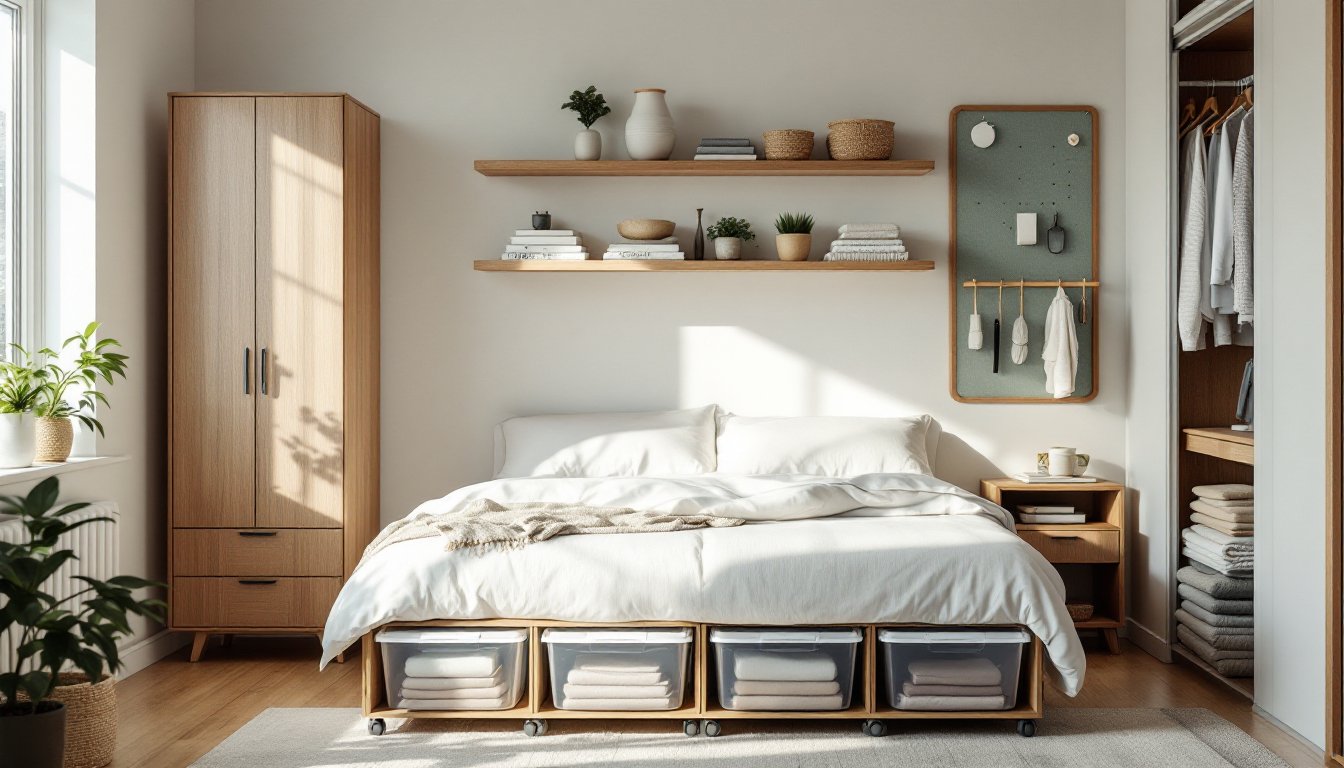
Walls are underutilized real estate in small bedrooms. Floating shelves, wall-mounted cabinets, and pegboards transform dead space into functional storage without eating floor area.
Floating shelves are the simplest option. A 24-inch shelf rated for 25–40 lbs per shelf works for books, décor, and lightweight items. Installation requires finding studs with a stud finder and anchoring French cleats (two interlocking wooden strips) or heavy-duty L-brackets directly into the framing. Drywall anchors alone won’t hold long-term weight. Shelves should be level, use a 4-foot level and mark stud locations before drilling.
Pegboard systems offer flexibility. A 4×8-foot pegboard costs $25–50 and attaches to studs with ½-inch spacers behind it to allow hook clearance. Hooks, bins, and accessories are cheap and rearrangeable. It works well for bedroom closet walls, above desks, or narrow alcoves. Paint the pegboard to match the room’s color scheme for a polished look.
Wall-mounted cubbies or ladder shelves lean against walls without drilling (tension rod style) or mount with minimal hardware. They’re ideal for renters or those wanting a non-permanent solution. Cubbies hold folded clothes, boxes, or display items and typically cost $50–150 depending on size.
Always locate studs before mounting anything heavier than lightweight shelves. Wall studs are typically spaced 16 inches on-center: use a stud finder to confirm their exact location. Avoid mounting storage above the headboard or in high-traffic pathways where items might fall.
Under-Bed Organization Solutions
The space beneath a bed is prime real estate, yet often wasted. Proper under-bed storage can free up closet and shelf space for daily-use items.
Rolling storage bins are the most practical choice. Look for bins that fit standard bed clearance (usually 8–12 inches) and come with wheels or gliders on the bottom. Clear plastic bins let the homeowner see contents without opening them. Label bins by category: off-season clothing, extra bedding, shoes, or archived items. Avoid bins that are too deep, reaching items in the back becomes awkward and they collect dust.
Fabric storage boxes that slide in and out are quieter and softer underfoot than plastic. Linen or canvas boxes ($15–40 each) breathe better than sealed plastic, reducing moisture and odors. They work especially well for sentimental items or off-season décor that needs protection from dust.
Bed risers and platform lifts increase clearance for deeper bins. Raising a bed frame 4–6 inches with heavy-duty risers (rated for the bed’s weight plus contents) creates room for standard-height storage containers. A queen bed with mattress typically weighs 200–300 lbs: risers should be rated for at least 1,000 lbs combined to account for occupant and stored goods.
Before filling under-bed storage, vacuum and place a dust sheet or cardboard underneath bins. Check clearance periodically, moisture, dust, and pests are common issues in low-ventilation spaces. Avoid storing anything damp, and rotate items every few months to prevent mildew.
Multi-Functional Furniture That Doubles as Storage
Smart furniture replaces traditional pieces while adding storage capacity, eliminating the need for separate cabinets or shelves.
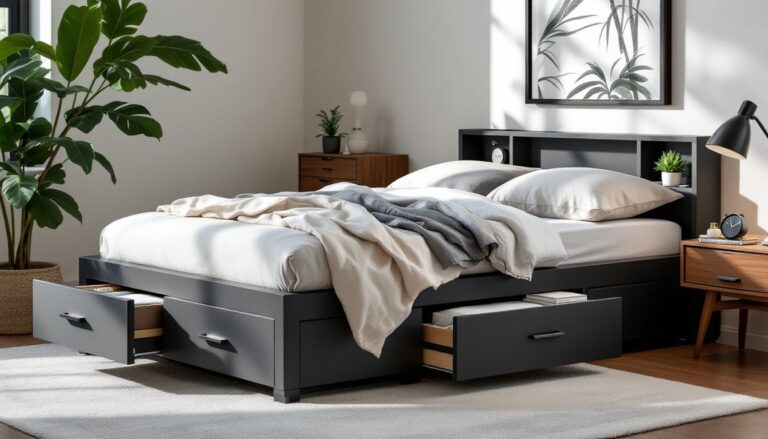
Storage beds have built-in drawers underneath or lifts that reveal deep compartments. A queen-size storage bed costs $400–1,200 depending on material and drawer quality. They’re ideal for small bedrooms because they consolidate sleeping and storage functions in one footprint. Look for drawers on smooth ball-bearing slides that move easily when loaded: cheaper models with friction slides jam quickly.
Benches at the foot of the bed with hinged tops store blankets, pillows, or seasonal items in the hollow interior. A simple wooden bench costs $150–400 to build or buy and doubles as seating. Verify the lid support hardware (pneumatic hinges) if building one, weak supports create a safety hazard.
Dresser alternatives like tall boy dressers or chest of drawers with a mirror save floor space compared to low, wide units. A 5-drawer dresser occupies the same footprint as a 3-drawer version but holds significantly more. Pair it with a mirror and leaning shelf above for a compact bedroom vignette.
Headboards with shelving or cubbies combine the bed frame with storage. Some styles have small shelves for books or a bedside table integrated into the headboard, reducing the need for a nightstand. These work well in tight spaces but make bed-making slightly more cumbersome.
When choosing multi-functional pieces, prioritize durability and weight limits. A storage bench supporting two adults needs sturdy joinery and hinges rated for at least 100 lbs. Check assembly instructions before purchasing, some pieces require cross-bracing or anchoring to walls for stability.
Corner Spaces and Awkward Nooks
Dead corners and sloped ceilings (in attics or upper-floor bedrooms) are tricky but solvable with the right approach.
L-shaped corner shelving fits snugly into corners without protruding into the room. Custom or semi-custom corner shelves ($100–300) maximize the usually wasted junction where two walls meet. They work for books, plants, or small décor items and are easier to dust than traditional corner cabinets with doors.
Tall, narrow cabinets (12–18 inches wide) slip into corners or beside nightstands. They provide enclosed storage without visual clutter and work well in older homes with irregular wall lines. Ensure the cabinet is shimmed and level before drilling into the wall.
Sloped ceiling and angled eave storage require custom bins or shelves built to the slope’s angle. Tailor-made solutions are expensive, but simple solutions exist: low-profile rolling bins under the slope, or floating shelves positioned parallel to the slant. An angled shelf, properly mounted, uses the space effectively without blocking light or headroom.
Floating corner desks create a workspace and storage combo in a 36–48-inch corner. A wall-mounted desktop with shelves above saves floor space in bedrooms that double as home offices. Support brackets should anchor into studs on both perpendicular walls for stability.
Measure corners carefully before ordering or building pieces. Walls are rarely perfectly square: a 1-2 inch deviation is common. Account for baseboard height, electrical outlets, and light switches before finalizing dimensions. Test fit cardboard mockups if possible before committing to permanent installation.
Built-In Storage and Custom Solutions
Custom built-ins maximize every inch and feel tailored to the room, though they require more skill, time, and planning than ready-made solutions.
Window seat storage transforms a bedroom window into a bench with hinged seating that lifts to reveal bins or shelves underneath. A basic window seat requires framing sills, adding joists (horizontal support beams) for the seat base, sheathing with plywood, and a hinged top. The project typically takes 2–3 weekends for a competent DIYer. Ensure the seat is braced internally and the hinge hardware is rated for the weight.
Closet reorganization with custom shelving, hanging rods, and bins can double storage capacity without expanding square footage. Remove the single rod and shelf, install adjustable shelving systems, add a lower rod for folded items or shoes, and incorporate pull-out bins. A 6×8-foot closet retrofit costs $200–600 in materials and takes one weekend. Use a level constantly, shelves must support 20+ lbs each.
Under-stair storage (if the bedroom sits beneath stairs) uses that angled, otherwise unusable space. Shallow drawers or slanted shelves fit the geometry. This is moderately complex and should be done when renovating: retrofitting an under-stair space in an existing bedroom is labor-intensive.
Wall-mounted fold-down desk with integrated shelving creates a workspace that folds flat when not in use. A quality fold-down mechanism costs $50–100: the desk and shelves add another $150–300 in materials. It’s a good project for intermediate DIYers and requires studs on both sides of the wall if the desk spans a wide area.
Built-in projects demand accurate measuring, square corners (or accounting for out-of-square walls), and attention to load-bearing requirements. Shelves holding heavy items like books need ½-inch plywood and support every 24–32 inches depending on load. Consider hiring a pro if the room has unusual geometry or electrical/plumbing in the way.
Smart Closet Organization Techniques
A well-organized closet is the foundation of a tidy bedroom. The right systems let homeowners find items quickly and use closet space efficiently.
Vertical dividers and closet organizers separate folded clothing into stacks, preventing the “avalanche effect” when grabbing one item. Bamboo or plastic dividers ($15–40 for a set) slip onto shelves and keep stacks neat. They’re especially useful for sweaters, jeans, and t-shirts that pile up easily.
Hanging organizers (shelf dividers for hanging rods, or hanging storage bins) hold belts, scarves, hats, or lightweight items without taking up shelf space. A 5-pocket hanging organizer costs $20–30 and attaches to an existing hanging rod with hooks.
Slim velvet hangers save closet width compared to plastic or wooden hangers. They cost slightly more upfront but prevent shoulder creases and allow 30–40% more garments per linear foot of rod space. A small closet gains significant capacity by switching hangers.
Shelf risers and double-hang rods increase usable closet volume. A shelf riser sits on an existing shelf and creates a second level above: double-hang rods let two rows of hanging clothes fit in the same vertical space (ideal for short items like t-shirts and jackets). A double-hang rod kit costs $25–50 and installs in minutes.
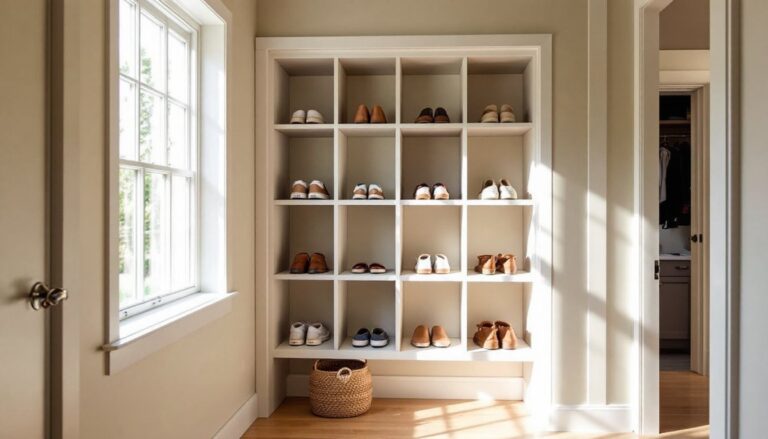
Drawer dividers and shoe racks corral socks, undergarments, and footwear. Drawer dividers ($10–25) prevent the mixed jumble. Clear shoe racks or over-door shoe organizers ($20–50) keep shoes visible and accessible. A narrow shoe rack tucked into a closet corner holds 8–12 pairs without taking usable shelf space.
Closet upgrades rarely require structural changes, making them ideal first projects for bedroom storage. Most materials are inexpensive and returnable if they don’t fit. Measure the closet rod length, shelf depth, and height before ordering anything: standard closet dimensions vary.
Conclusion
Small bedrooms thrive with layered storage: vertical systems pull weight off the floor, multi-functional furniture eliminates redundancy, and closet organization compounds the effect. The most successful bedroom storage combines purchased solutions (shelves, bins, organizers) with one or two built-in projects tailored to the room’s layout. Start with the highest-impact, lowest-difficulty projects, closet reorganization and under-bed bins, then progress to shelving or furniture swaps. Measure twice, secure anything overhead or load-bearing, and avoid the common trap of filling storage faster than items are used. Done right, small bedroom storage transforms a cramped space into one that feels organized and livable.