California King Bed Frames With Headboard and Storage: Your Complete 2026 Buyer’s Guide

A California king bed, that luxurious 72″ × 84″ sleeping surface, offers more room than a standard king without stealing the footprint of a queen. But when you’re shopping for a frame with both a headboard and built-in storage, the options feel endless, and so do the questions. Does the headboard need to match your wall color? Can the storage actually handle the weight of winter bedding, or is it just decorative window dressing? This guide cuts through the noise and walks through what matters: construction quality, realistic storage capacity, headboard styles that work with any bedroom layout, and the practical details that separate a frame you’ll appreciate in five years from one you’ll regret in five months.
Key Takeaways
- A California king bed frame at 72″ × 84″ provides nearly a full extra foot of width compared to a queen, making it ideal for spacious master bedrooms where a standard king would dominate.
- Quality matters significantly with California king bed frames because stress on rails and legs concentrates differently within the narrower footprint, requiring weight ratings of 500–1,000 pounds.
- Upholstered headboards offer comfort for reading but require washable covers to prevent dust and stains, while solid wood headboards provide durability and easier maintenance in any climate.
- Under-bed drawers with full-extension ball-bearing glides rated for 75–100+ pounds per drawer are the most practical storage solution, allowing a California king frame to store 300–400 pounds of seasonal items.
- Before purchasing, verify mattress compatibility, measure drawer depth (15+ inches for bulky items), ensure 24 inches of clearance around the bed, and carefully read critical reviews to avoid common failures like drawer wobble or headboard sagging.
- Budget for assembly and white-glove delivery (typically $150–300) for heavy California king bed frames, which often weigh 150–250 pounds and arrive disassembled.
What Makes California King Bed Frames Stand Out
The California king isn’t just a slightly wider bed, it’s a strategic middle ground. At 72 inches wide and 84 inches long, it gives couples or solo sleepers who like sprawl nearly a full extra foot of width compared to a standard queen, yet it’s 4 inches narrower than a full eastern king. This dimension makes it ideal for master bedrooms that are tight on width but long on depth, or for master suites where a standard king would dominate the space.
What this means for frame selection is that manufacturers have to design differently. A California king frame needs to handle the same weight distribution as a standard king, typically rated for 500–1,000 pounds depending on slat or box spring support, but must do it within a narrower footprint. This is why quality matters more than with smaller beds: stress concentrates differently on the rails and legs.
When you add a headboard and storage, you’re not just buying a bed, you’re buying bedroom real estate. A frame with integrated drawers, shelves, or under-bed compartments can eliminate the need for a separate dresser or nightstand, a genuine space-saver in modern bedrooms where square footage is precious. The headboard transforms the bed from furniture into a focal point, anchoring the room’s design and adding acoustic benefits (harder to hear through a padded or solid headboard into an adjacent room).
Key Features to Look for in a Quality Frame
Headboard Design and Material Options
Headboards come in five main styles: upholstered (fabric or leather), solid wood, metal, hybrid (wood frame with upholstered panels), and adjustable/modular. Each has trade-offs.
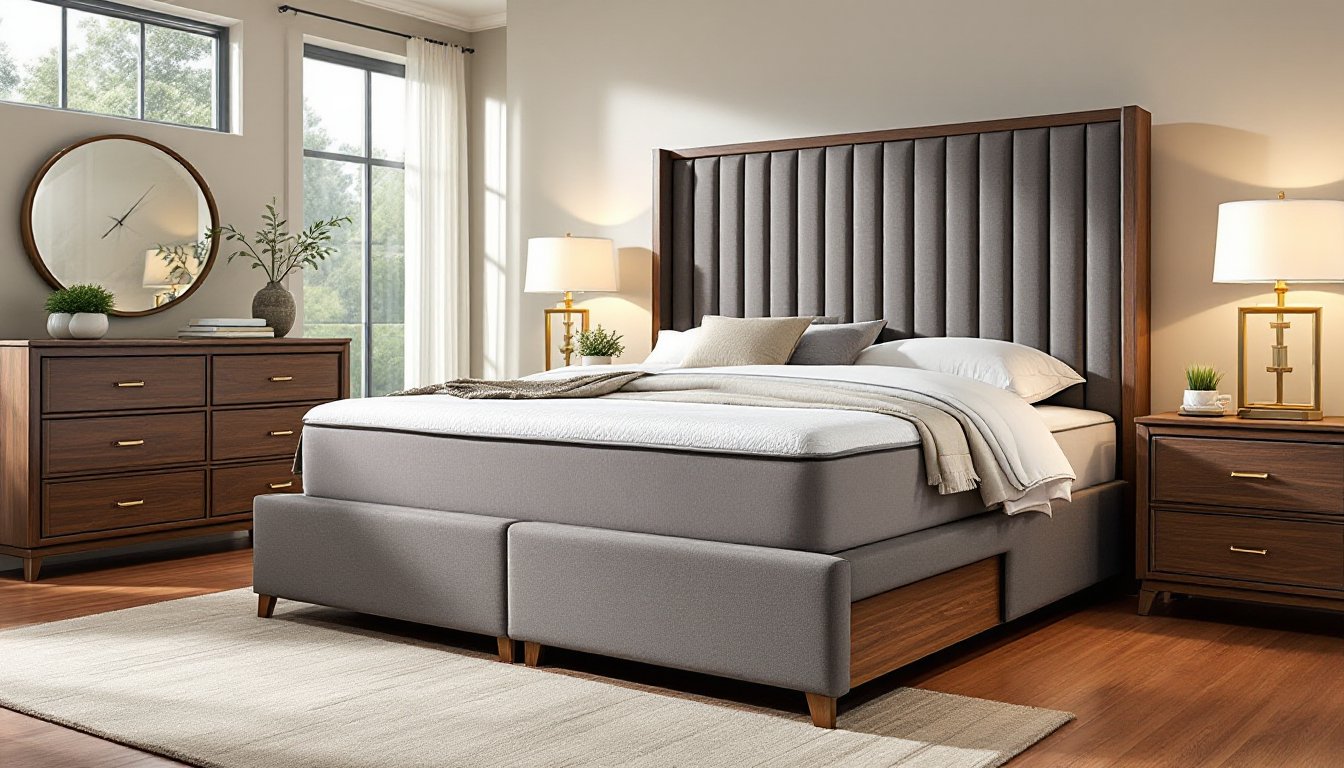
Upholstered headboards are the softest choice, good for reading in bed, and hide dust well. The downside: fabric traps dust mites and pet hair, and stains need prompt cleaning. Look for headboards with a removable, washable cover, this feature alone extends the headboard’s life by years. Materials rated for medium-to-heavy traffic (like performance fabrics) resist pilling and soiling better than standard velvet or linen.
Solid wood headboards (oak, walnut, or engineered wood with veneer) offer durability and a cleaner aesthetic. They’re easier to clean and won’t wear like fabric. Verify that the wood is kiln-dried to prevent warping: this is especially important in coastal or humid climates. Stain or paint can be refreshed when needed.
Metal headboards are sleek and industrial-modern. Steel or aluminum won’t absorb moisture and are virtually maintenance-free. But, they conduct noise and cold readily, and they don’t provide acoustic dampening.
Hybrid frames combine a solid wood frame with upholstered panels in the center or flanking sections. This hybrid approach gives you the low-maintenance frame with some of the comfort of padding.
Regardless of material, ensure the headboard is securely bolted to the frame, not glued or simply resting against the wall. A loose headboard will develop a rattle and shift over time, especially on adjustable beds or with a second sleeper.
Built-In Storage Solutions
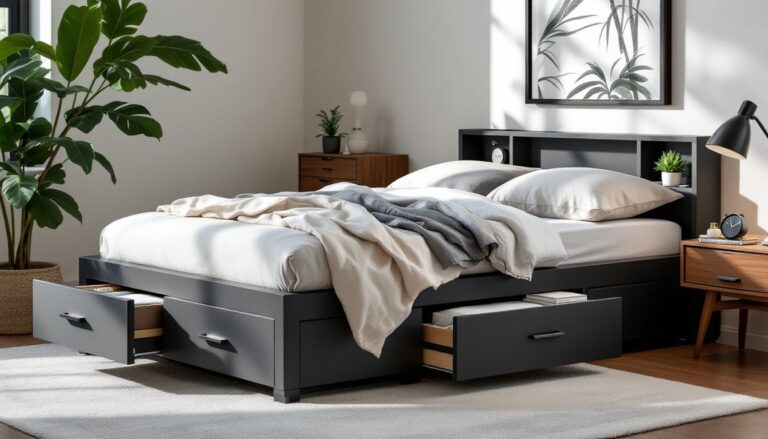
Not all under-bed storage is created equal. Before buying, ask three questions: What’s the weight capacity of each drawer or shelf? How much clearance do you need to pull drawers open fully? Is the storage sealed against dust?
Drawers underneath the frame are the most practical option. Quality frames use full-extension glides (ball-bearing tracks that allow the drawer to slide all the way out without tipping) rated for 75–100+ pounds per drawer. Cheap frames use partial-extension slides or wooden runners, which wear out fast and feel flimsy. A California king with four under-bed drawers can store 300–400 pounds of bedding, seasonal clothing, or other items if the glides are solid.
Shelves or open compartments take up less weight but provide less protection from dust. Use these for items you access often (books, baskets) rather than things you want to keep pristine.
Lift-top or tilt-up storage (a single large compartment beneath the mattress) is elegant and holds plenty, but it’s slower to access and requires you to remove the mattress to use it fully. This style works best for seasonal storage you won’t touch often.
Always measure the depth of drawers before buying. A typical under-bed drawer is 10–14 inches deep, enough for folded clothes but not for oversized bedding bags. If you plan to store bulky items, you need 15+ inches. Also confirm that drawer heights allow your bed skirt or dust ruffle to hang properly without bunching around the openings.
Finally, check whether the frame’s weight is distributed to the legs or also to the rails. Some frames use rail supports so that even loaded drawers don’t stress the legs unevenly, this prevents wobbling and floor dents over time.
Finding the Right Frame for Your Bedroom
Start with what you’re not willing to compromise on. Are you a hot sleeper who needs lots of airflow? A wooden platform bed (slats only, no box spring) will breathe better than a metal frame with a box spring. Do you adjust your mattress height frequently for health reasons? An adjustable base won’t work with all headboards, so check compatibility upfront. Do you have pets that jump on the bed? A sturdy, low-profile metal frame handles claw marks and jumping better than upholstered headboards.
Next, verify mattress compatibility. California king mattresses come in many firmness levels but are otherwise standardized, most frames work with any mattress brand. But, some beds are designed specifically for memory foam (firmer base needed) or air mattresses (different support requirements). Cross-check your mattress specifications with the frame’s slat spacing: slats should be no more than 3 inches apart to prevent mattress sagging.
Consider assembly and delivery logistics. Bed frames with headboards and storage are heavy, often 150–250 pounds, and arrive disassembled. If you’re not comfortable using a power drill and leveling complex joinery, budget for white-glove delivery and assembly (typically $150–300). Many online retailers offer this: local furniture stores nearly always do.
Room layout matters too. A California king in a 12×14 bedroom dominates differently than in a 14×16 space. Measure twice: imagine the bed with nightstands on either side, and ensure there’s at least 24 inches of clearance to the nearest wall or dresser for making the bed and changing sheets. A tall headboard with shelving on top adds 10–15 inches of visual height: if your ceiling is 8 feet, this can feel cramped. If your room is smaller or has low ceilings, choose a low-profile headboard or skip the shelving.
Finally, establish a realistic budget and compare cost per feature. A $800 frame with storage drawers and a padded headboard may cost less per square foot of utility than a $1,200 designer bed that looks beautiful but has minimal function. Check reviews on sites like Amazon and Wayfair, but read the critical reviews most carefully, common complaints (drawer wobble, headboard sagging, wrong dimensions) are red flags. Warranty length (often 1–5 years on defective parts) is a good sign of manufacturer confidence.
Conclusion
A California king bed frame with headboard and storage isn’t a throwaway purchase, it’s an anchor for your bedroom and a tool for organization. The right choice depends on your bedroom’s dimensions, your lifestyle, and whether you prioritize aesthetics, storage capacity, or durability. Measure your space carefully, clarify what features matter most, and don’t skip the assembly and delivery logistics. With those details locked down, you’ll find a frame that works hard and looks great for years.