Built-In Storage Cabinets for Living Rooms: 2026 Design Guide to Maximize Space and Style
Built-in storage cabinets are one of the smartest investments a homeowner can make in a living room. Unlike freestanding furniture that eats floor space and looks temporary, custom cabinetry feels integrated into the room itself, and actually works. A well-designed built-in system hides clutter, displays collections, anchors the room’s aesthetic, and adds real value when it’s time to sell. Whether someone’s dealing with a tiny apartment, an open floor plan, or just too many books, built-in cabinets solve the storage puzzle without sacrificing style. This guide walks through the decisions that matter: styles that work, materials that last, smart organization strategies, and what’s realistic for a DIYer versus when to call a pro.
Key Takeaways
- Built-in storage cabinets maximize living room space, reduce visual clutter, and add measurable resale value compared to freestanding furniture.
- Modern minimalist and transitional styles dominate built-in cabinet design, with material choices ranging from budget-friendly melamine to premium hardwood depending on durability and aesthetic priorities.
- Smart organization strategies like adjustable shelves, closed storage below with open display above, and integrated lighting transform built-in storage from purely functional to both beautiful and practical.
- DIY installation works for simple single-unit designs, but complex projects, multi-section builds, and structural integration require professional cabinetmakers to ensure precision fits and safety.
- Proper wall anchoring into studs and careful measurements (top, middle, bottom) are critical to preventing sagging shelves and ensuring built-in cabinets stay secure long-term.
Why Built-In Storage Cabinets Transform Your Living Room
Built-in cabinets solve problems that floating shelves and TV stands can’t. They maximize vertical space, define seating areas, and make small rooms feel larger by eliminating visual clutter on the floor. A strategically placed cabinet bank can hide everything from board games to streaming equipment while displaying family photos or art objects on the open shelves above.
There’s also the practical matter of anchoring a room’s design. Built-ins serve as the bones, the feature that ties together paint colors, flooring, and furniture arrangement. They’re also customizable to fit the actual dimensions of a space, unlike store-bought units that often leave awkward gaps or oversized footprints. For anyone who’s struggled to find a media console that fits both a TV and sound system, or shelving that doesn’t wobble under the weight of books, built-ins deliver precision and permanence.
From a resale perspective, quality built-in storage in a living room appeals to buyers. It signals thoughtful design and shows that a homeowner invested in the bones of the room, not just cosmetics.
Popular Built-In Cabinet Styles and Designs
The style a homeowner chooses sets the tone for the entire space. Built-in cabinets work across every aesthetic, the key is matching the cabinet face, hardware, and finish to the room’s existing character.
Modern Minimalist Cabinets
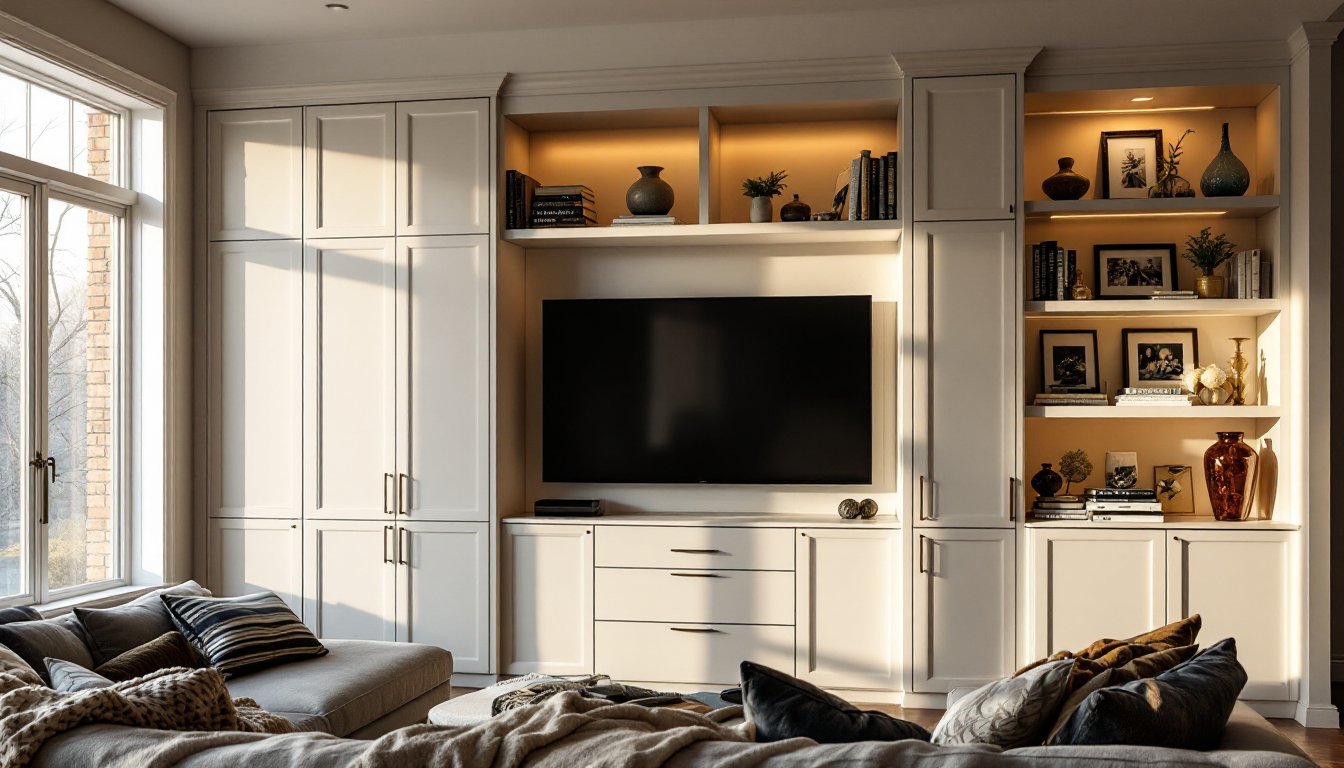
Clean lines, flat-panel doors, and neutral finishes define modern built-ins. Think matte black, white, or natural wood with no visible hardware or handles (push-to-open mechanisms instead). This style works especially well in open-concept homes where storage needs to visually disappear. Shelving is often integrated with closed cabinetry below and open display space above, creating rhythm and preventing the “furniture wall” effect.
Modern builds benefit from hardware-free designs and recessed lighting inside shelves, small touches that cost little but add polish. The challenge is that modern styling demands precision: gaps, misaligned shelves, and rough finishes are instantly visible.
Traditional and Transitional Designs
Traditional built-ins lean into raised-panel doors, crown molding, and decorative hardware (brass knobs, wooden pulls). Transitional designs borrow from both, think shaker-style doors with simple metalware, warmer wood tones, and a mix of closed and open storage. These styles are more forgiving of minor imperfections and suit homes with classic architecture.
Transitional cabinets often feature glass doors on upper sections (great for displaying collections) and solid doors below for concealing less-attractive items. Baseboards, trim details, and finish selection matter here: they’re opportunities to tie the built-in to crown molding or wainscoting elsewhere in the room.
Choosing Materials and Finishes That Complement Your Space
Material choice affects durability, cost, and appearance. Plywood is the workhorse for DIY and professional builds alike, it’s stable, takes fasteners well, and comes primed for paint or stain. Standard plywood sheets are 3/4 inch thick (actual measurement), which gives built-ins a solid, substantial feel. Hardwood (oak, maple, walnut) costs more but ages beautifully and accepts stain in ways plywood can’t.
Paint is forgiving and hides imperfections: neutral grays, whites, and blacks are timeless. A quality primer followed by two coats of cabinet-grade paint (satin or semigloss finish) resists fingerprints and cleans easily. Stain and clear coat highlight wood grain but requires good wood selection and flawless surface prep, any dust, dents, or gaps show under clear finishes.
Veneer (a thin layer of real wood glued to plywood) splits the difference between solid wood and paint: it looks premium but is more DIY-forgiving than solid hardwood. Melamine and other engineered finishes are budget-friendly and durable but feel less substantial and don’t refinish well.
Hardware, knobs, pulls, and hinges, should match the style. Brass and oil-rubbed bronze work with traditional: matte black, stainless, and handle-free designs suit modern. Visit a cabinet showroom or home center to see samples in person: photos don’t capture finish quality the way standing in front of them does.
Smart Organization Tips for Living Room Built-Ins
A beautiful cabinet that doesn’t function is just expensive wall art. Start by cataloging what actually needs to live in the living room, electronics, books, games, seasonal decor, blankets, then design storage accordingly.
Adjustable shelves beat fixed ones: they adapt as needs change. Most DIYers use shelf pins or clips that slot into drilled holes (typically spaced 1.5 inches apart) on cabinet sides. This flexibility is worth the extra drilling time during build.
Closed storage below, open display above is the golden ratio. Lower cabinets hide clutter and keep the room feeling calm: upper shelves display objects that make the space feel lived-in and personal. Deep shelves (12 inches or more) accommodate book spines and larger objects: shallower shelves (8–10 inches) work better for decor and smaller items.
Vertical dividers inside closed cabinets prevent stacks from toppling, especially useful for storing board games, vinyl, or art supplies. Pullout baskets or sliding organizers cost a bit more but dramatically improve access and visibility in deep spaces. Cable management holes drilled through cabinet backs make running TV and speaker wires clean and invisible.
Light matters too. Recessed or strip lighting in upper shelves highlights collections and serves the room when overhead lights are dimmed. Motion-sensor or battery-powered options work if wiring is difficult.
Installation and Professional Considerations
Here’s the honest truth: building and installing built-in cabinets is doable for confident DIYers but has real failure points. Walls are rarely square or plumb, which means a cabinet that looks perfect in the workshop might not fit the space. Laser levels and detailed measurements (top, middle, bottom of the wall) are non-negotiable.
Wall anchoring is critical for safety and durability. Built-ins must be screwed into studs (typically 16 inches on center) using 3-inch wood screws. If a cabinet bank doesn’t align with stud locations, blocking (solid wood backing) gets installed between studs first. Shelves holding books or electronics need rock-solid support: sagging shelves are both ugly and dangerous.
DIY Feasibility: A simple single-unit cabinet with fixed shelves, painted finish, and straightforward design is realistic for someone with basic carpentry skills, a miter saw, a drill, and clamps. More complex projects, curved designs, glass doors, built-in lighting, or island-style units, benefit from professional installation.
When to hire a pro: Multi-section builds, anything involving structural walls, custom sizing that requires cuts on-site, or plumbing/electrical integration. A cabinetmaker or skilled carpenter ensures precise fits, hidden fasteners, and professional finishing. Costs vary widely ($2,000–$15,000+ depending on size and materials), but the time saved and quality delivered often justify the expense.
Permits: Most living room built-ins don’t require permits since they’re non-structural cosmetic work. Check local building codes: requirements vary by jurisdiction. If the project involves moving electrical outlets or relocating utilities, permits become mandatory.