Caitbrook King Storage Bed: The Space-Saving Solution for Modern Bedrooms

Small bedrooms, guest rooms, and multipurpose spaces demand smart furniture choices, and the Caitbrook King Storage Bed delivers exactly that. This platform bed combines essential sleeping functionality with integrated storage drawers underneath, eliminating the need for a separate dresser or nightstands. For anyone juggling tight square footage, transitioning to a smaller home, or simply tired of clutter, this bed offers a practical answer. The Caitbrook addresses a common DIY headache: finding furniture that works hard without dominating the room. Built to accommodate a king-size mattress, it’s designed for real-world bedrooms where every inch counts.
Key Takeaways
- The Caitbrook King Storage Bed combines a platform bed frame with built-in drawer storage, eliminating the need for a separate dresser while maximizing space in small bedrooms.
- This RTA furniture uses engineered wood construction with ball-bearing drawer slides, offering 5-10 years of reliable use with proper assembly and maintenance at an affordable price point.
- The Caitbrook King Storage Bed accommodates any mattress type without requiring a box spring and provides 45-65 cubic feet of storage capacity ideal for seasonal items and off-season clothing.
- Assembly takes 4-6 hours for one person and requires only basic tools like a power drill, level, and measuring tape—no advanced carpentry skills needed.
- Storage beds reduce bedroom clutter and free up floor space, though drawers require bending and pulling to access, making them best for storing seasonal items rather than daily-use essentials.
What Is the Caitbrook King Storage Bed?
The Caitbrook King Storage Bed is a platform-style bed frame that eliminates the need for a box spring while providing built-in drawer storage below the mattress. Rather than sitting atop four legs like a traditional frame, the Caitbrook uses a solid platform base with pull-out drawers integrated into the structure itself. This design works for king mattresses (76 inches wide by 80 inches long) and keeps the mattress elevated roughly 14-18 inches from the floor, depending on the final assembly height.
This isn’t a low-profile Japanese-style platform: the Caitbrook maintains enough clearance for under-bed airflow and drawer access. It’s marketed primarily as ready-to-assemble (RTA) furniture, meaning it ships flat-packed and requires on-site assembly. The bed frame itself is constructed from engineered wood (composite materials), with drawer slides made from metal or plastic depending on the specific variant you purchase. Think of it as the middle ground between an IKEA Malm and a custom built-in: affordable, functional, and less labor-intensive than building from dimension lumber.
Key Features and Design
Storage Capacity and Organization
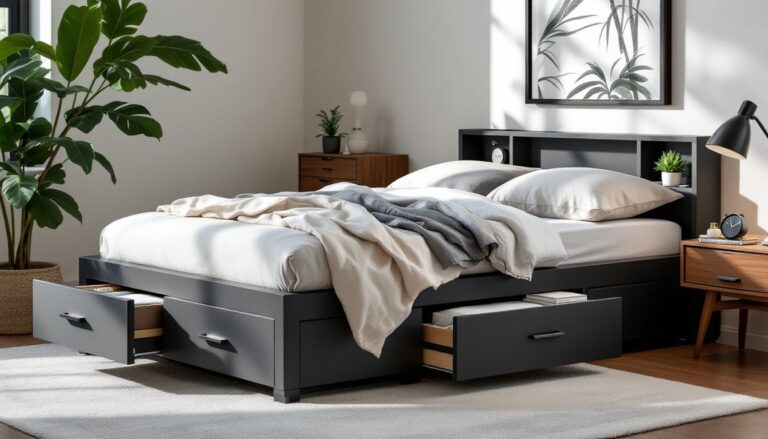
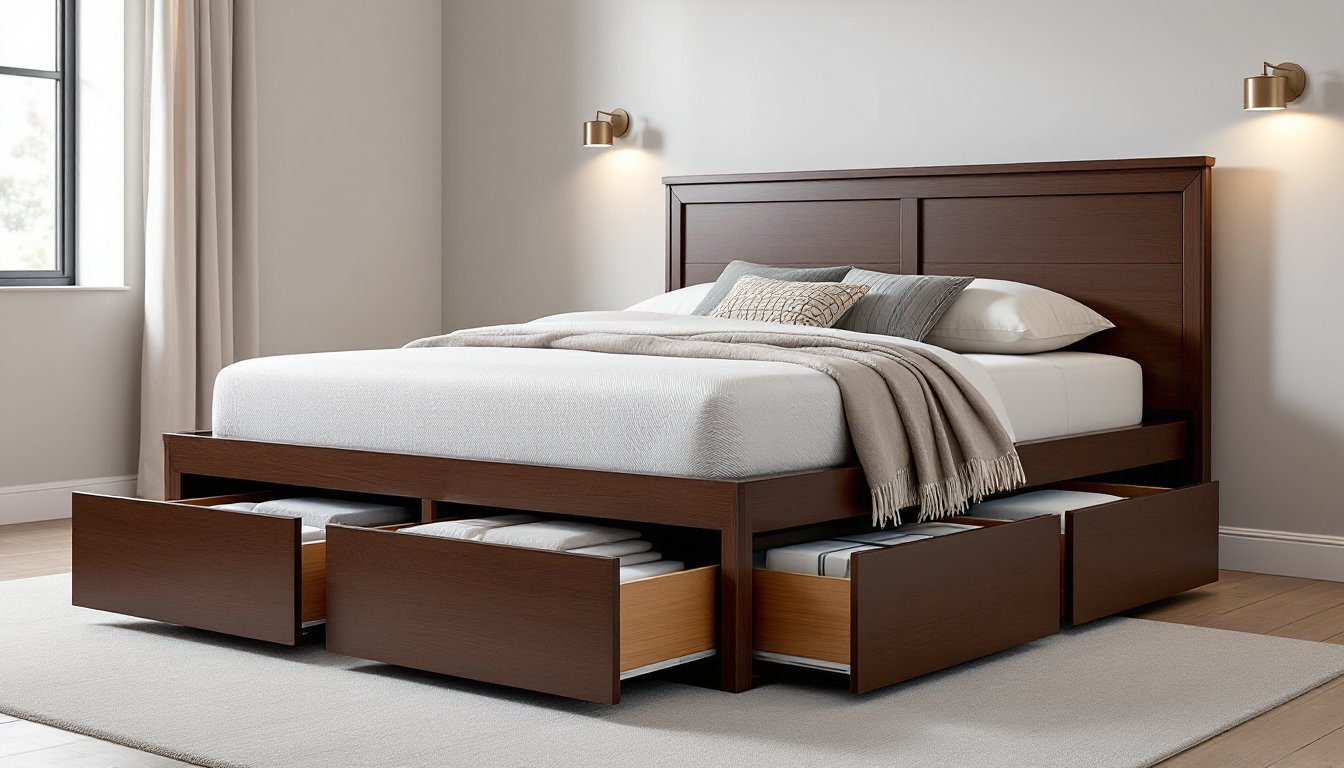
The main selling point is storage. The Caitbrook typically includes two or four drawers (model-dependent) positioned along the sides or bottom of the platform. Each drawer slides out on heavy-duty ball-bearing slides, which is critical, cheap plastic guides jam, and we’ve all fought a stuck drawer. The total storage volume usually ranges from 45-65 cubic feet, depending on configuration. That’s enough for seasonal bedding, off-season clothing, pillows, or linens without creating a permanent pile on the bedroom floor.
Drawer depth typically runs 15-18 inches, so you won’t fit a dresser-sized load, but blankets and folded clothing fit comfortably. Many models include a solid platform top rather than a slatted base, which means any mattress type works, innerspring, foam, hybrid, latex. You don’t need a box spring, which saves money and reduces overall bed height. The headboard, if included, provides a mounting point for bedside lighting or shelving, though base models may omit it to keep costs down.
Finish options usually include espresso (dark brown), gray, or natural oak veneers. The wood grain is printed rather than solid: it’s cosmetic veneer over composite, which is typical for this price point. That matters for longevity, veneer can chip if you’re rough-and-tumble, but for normal use, it holds up fine.
Material and Build Quality
Let’s be honest: the Caitbrook uses engineered wood (plywood and particleboard), not solid hardwood. This is standard for mass-produced, budget-friendly storage beds. The frame relies on screws, dowels, and cam locks rather than mortise-and-tenon joinery. This construction method keeps costs down and makes assembly DIY-friendly, no power tools required, though a power drill speeds things up significantly.
The drawer slides are where quality matters most. If they’re ball-bearing slides (which they typically are in mid-range models), they’ll glide smoothly and handle repeated use. Plastic guides feel cheap and fail faster. Check the product specs, look for “full-extension” or “soft-close” mentions, which indicate better hardware.
Weight capacity typically maxes out around 500-700 pounds distributed load, which accommodates a sleeper plus a partner comfortably. The platform’s structural integrity depends on proper assembly and fastener tightness. Loose bolts over time are the enemy, periodic checks during the first few months prevent squeaking and wobbling. The veneer surface resists dust and spills reasonably well but won’t withstand sanding or refinishing: treat it like you’d treat IKEA furniture, and it’ll last years without issue.
Assembly and Installation
Here’s where the Caitbrook earns its “DIY-friendly” reputation. Assembly requires no advanced carpentry, just patience, a level, and a basic toolkit. Most units arrive in 3-5 boxes weighing 50-80 pounds each, so rope a helper in if you’re solo. Heavy components demand a second set of hands to avoid dropping something expensive on your foot.
You’ll need: a power drill or impact driver, a Phillips-head screwdriver, a level (a 2-foot level works best), a measuring tape, and an allen wrench set. Some kits include the wrench: check before buying. Assembly typically takes 4-6 hours for a single person working alone, less with two people.
The typical sequence goes: assemble the side rails and headboard frame first, then attach the platform slats or solid platform deck. Drawer assembly comes next, slides attach to the drawers and the frame separately, then you align and screw them in. This is where accuracy matters: misaligned drawer slides jam or bind. Measure twice, mark your hole positions lightly with a pencil, and use the provided drilling jig if included.
Level the bed before final tightening. Uneven bases cause drawers to drift or stick. Shim under the legs with metal shims if needed. Once level, torque all fasteners firmly, loose bolts migrate over time, and a wobbly bed is a squeaky bed. Check the hardware again after a week of normal use: tighten any bolts that’ve worked loose during initial settlement.
Pros and Considerations
The wins: Storage beds eliminate the need for separate bedroom furniture, freeing up floor space in cramped quarters. No box spring means fewer components to buy and less height to scramble into at night. Assembly is straightforward enough that most adults handle it without hiring help. The cost-to-function ratio is strong: you’re paying for a bed and a dresser’s worth of storage in a single unit. They’re also lighter than solid wood furniture, so moving or repositioning later isn’t a two-person wrestling match.
The catches: Engineered wood isn’t heirloom furniture. It’ll serve 5-10 years reliably with normal use, but it won’t outlast solid hardwood. If you plan to move repeatedly, RTA furniture takes a hit each time, fasteners loosen, veneer can chip during transport. The drawers may develop minor play after years of use: this is normal and doesn’t make the bed unsafe, just slightly less pristine.
Another consideration: accessing under-bed storage requires bending and pulling drawers out. This works fine for seasonal items, but if you reach for something daily, consider drawer placement. Some Caitbrook variants position drawers for more convenient access than others. Finally, pet owners should note that dust accumulates under storage beds more than on traditional frames with legs, plan to vacuum under there occasionally.
Conclusion
The Caitbrook King Storage Bed solves a genuine problem: providing essential sleeping space plus storage in a compact footprint. It won’t replace bespoke custom furniture, but for renters, downsizers, and space-conscious homeowners, it’s a solid, affordable choice. Assembly is manageable, material quality is decent for the price, and functionality is straightforward. If your bedroom needs growing storage without a footprint penalty, this bed earns consideration. Just manage expectations, it’s practical furniture built to last a half-decade or more with normal use, not a piece destined for your grandchildren.