Champion Tool Storage: The Complete Guide to Organizing Your Workshop in 2026

A disorganized workshop doesn’t just waste time, it risks projects, safety, and tool longevity. Every minute spent hunting for a wrench is a minute not spent building. Champion tool storage solutions bridge that gap, turning chaotic benches and scattered shelves into efficient, professional work environments. Whether you’re outfitting a garage, basement, or dedicated shop space, the right tool storage system keeps equipment accessible, protected, and ready to go. This guide walks through Champion’s offerings, smart organization strategies, and practical tips for making the most of any workshop footprint.
Key Takeaways
- Champion tool storage solutions transform disorganized workshops into efficient, safe spaces that protect equipment, reduce project timelines, and prevent costly duplicate purchases.
- Choose portable tool chests for flexibility across job sites and limited spaces, or invest in stationary cabinets with 1,000–2,000+ cubic inches of capacity for dedicated workshops requiring maximum organization.
- Organize tools by category—hand tools in shallow drawers, power tool accessories in deeper compartments, and hardware in divided inserts—keeping frequently used items at eye level for quick retrieval.
- Maximize small workshop spaces using vertical storage like pegboards, magnetic strips, rolling mobile chests, and wall-mounted lockers to maintain accessibility without sacrificing floor space.
- Maintain your Champion tool chest with regular lubrication of ball-bearing drawers, moisture control with desiccant packets, and quarterly latch inspections to ensure decades of reliable performance.
- Proper tool storage directly impacts project quality, workplace safety, and equipment longevity by protecting tools from humidity, dust, and damage while creating a professional work environment.
Why Proper Tool Storage Matters
Tool storage isn’t just about neatness. Proper organization directly impacts project quality, safety, and the lifespan of your equipment. When tools are protected from humidity, dust, and impact, they perform better and last longer. A well-organized workshop also reduces accidents, you’re not tripping over cords or knocking over unsecured items while reaching for something.
Beyond that, efficient storage saves real money. You won’t buy duplicate tools because you can’t find the one you already own. Project timelines shrink when you spend 30 seconds grabbing a tool instead of 5 minutes digging through a pile. Workshop storage also protects your home. Heavy tools stored haphazardly on shelves become hazards: a Champion tool chest secures equipment where it belongs. Finally, a well-maintained tool collection holds resale value if you ever upgrade or downsize. Invest in storage now, and you’re investing in your workshop’s future productivity and safety.
Champion Tool Chest and Cabinet Options
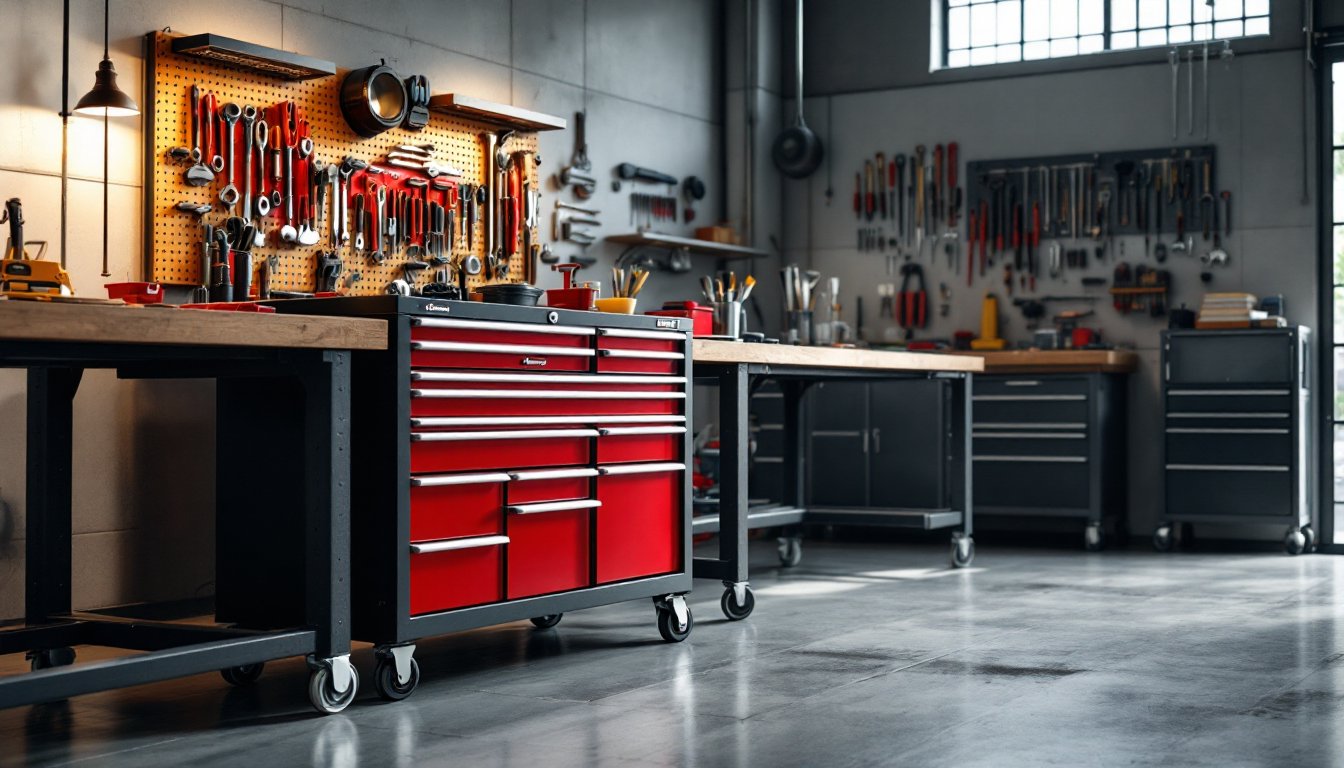
Champion manufactures a range of storage solutions to fit different workshop sizes and budgets. Their portable tool chests are popular with contractors and hobbyists who move between job sites. These typically feature metal construction, ball-bearing drawers, and secure latches, holding everything from hand tools to small power tools.
Stationary cabinets are the anchor of a permanent workshop. Champion’s larger cabinet systems offer more drawer capacity, deeper compartments for oversized tools, and mounting options for wall installation. These units often incorporate a work surface on top, doubling as a mobile workbench.
Portable vs. Stationary Storage Solutions
Portable chests excel when flexibility matters. They’re built from rolled steel or composite materials, weigh 30–100 pounds (depending on size and contents), and feature pull-out handles or wheels. Drawers typically have shallow, medium, and deep sections to accommodate hand tools, bits, and small hardware. The trade-off is storage volume, a quality portable chest holds 400–800 cubic inches of usable space.
Stationary cabinets anchor a workshop. Most measure 36–48 inches wide, 18–24 inches deep, and stand 30–60 inches tall. They hold significantly more, 1,000–2,000+ cubic inches, and often include a solid top for work or assembly. Wall-mounted options save floor space, though they require wall studs rated for the loaded weight (typically 16 inches on center). Stationary units sacrifice portability but gain organization depth, security features, and long-term durability.
Choose portable if you work multiple locations or have limited space. Pick stationary if you have a dedicated workshop and need maximum capacity.
Organizing Tools by Category
How you arrange tools inside a chest or cabinet matters as much as which unit you buy. Grouping by category cuts retrieval time and prevents tools from getting lost or damaged in transit.
Hand tools go in shallow drawers where they’re visible. Keep wrenches together (open-end, adjustable, specialty sizes), screwdrivers by type (Phillips, flat, square-drive), and pliers with handles facing out. Some people label drawer dividers: others arrange by size gradient. Either method works, consistency is what counts.
Power tools and accessories need deeper drawers. Drill bits, saw blades, and sanding pads belong in compartmented boxes or small cases. Store chucks and collets separately so they don’t rattle loose. Batteries and chargers should be in a cool, dry spot away from metal shavings that might short circuits.
Hardware and fasteners fit in shallow drawers with divided inserts. Sort bolts, screws, and nails by size and type. Plastic organizer bins or small ziplock bags work well here.
Measuring and marking tools (rules, squares, levels, chalk lines) go where they won’t get bent, ideally hanging or in a flat drawer section with padding.
The golden rule: store tools where you’ll use them. Tools for plumbing projects live separately from woodworking tools. Heavy-use items sit at eye level or waist height. Seasonal equipment (holiday decorations, snow gear) stays out of the workshop entirely.
Maximizing Small Workshop Spaces
Not everyone has a sprawling garage. Apartment dwellers, urban craftspeople, and hobbyists with shared spaces need clever, compact storage.
Vertical storage is your best friend. Wall-mounted pegboards with hooks hold hand tools and small items without eating floor space. Install pegboard 48–60 inches above the floor so tools hang at comfortable reach. Use a stud finder to locate wall studs, then anchor with toggle bolts or wood screws into studs every 16 inches, critical for load safety.
Magnetic strips mounted on walls hold metal hand tools (wrenches, screwdrivers, chisels) in a slim profile. These take up almost no depth and cost $15–$40 for a decent quality unit.
Rolling mobile chests solve floor-space constraints. A Champion portable chest on wheels sits in a corner and rolls out when needed. Measure your space first, a 24-inch wide chest fits tight hallways and apartment closets better than a 36-inch stationary cabinet.
Under-bench storage is often wasted. Store heavy power tools (circular saws, grinders) on lower shelves or in rolling drawers beneath a workbench. This lowers your center of gravity and keeps the bench clear for active work.
Wall lockers or tall, narrow cabinets (18–24 inches wide) tuck into corners. Stacked vertically, they provide surprising capacity without sprawling footprint.
Prioritize: keep only active tools in the workshop. Store seasonal equipment, bulk materials, and retired tools elsewhere.
Maintenance Tips for Long-Lasting Storage Systems
A Champion tool chest is only as good as its care. Regular maintenance extends lifespan and keeps drawers operating smoothly.
Lubricate ball-bearing drawers every 6–12 months. Use a light machine oil or silicone spray on the tracks and rollers. Wipe excess with a clean cloth to prevent dust buildup. Don’t over-apply, excess oil attracts sawdust and grit.
Check latches and locks quarterly. Tighten screws if they loosen (vibration from nearby machinery causes this). If a latch feels sticky, apply a tiny amount of lubricant and cycle it open/closed several times.
Keep moisture out. Even metal chests can rust inside if humidity is high. Use desiccant packets (silica gel) or a small moisture absorber inside drawers, especially in basements or unheated spaces. Replace packets every 2–3 months or as they become saturated.
Clean spills immediately. Leaked coolant, oil, or solvents corrode metal and seep into drawers. Wipe up with a cloth and let air dry fully before closing.
Inspect and replace gaskets if your chest has weatherstripping. Cracked rubber lets dust in and reduces security.
Don’t overload drawers. Check weight ratings, most ball-bearing drawers handle 50–100 pounds per drawer. Overstuffing bends tracks and jams slides. Spread heavy items across multiple drawers.
Sand and touch up scratches on the exterior with fine steel wool and a matching metal paint if rust spots emerge. Prevention beats repair.
These quick steps keep your storage system functioning like new for decades.
Conclusion
Champion tool storage solutions, whether a portable chest or a stationary cabinet, transform workshop chaos into organized efficiency. The right setup saves time, protects your tools, and keeps your workspace safe and professional. Start by assessing your space, tool volume, and workflow, then choose portable or stationary storage accordingly. Organize by category, use vertical space wisely, and maintain your system with regular cleaning and light lubrication. A well-organized workshop doesn’t just feel better, it works better. Invest in storage today, and you’ll reap the benefits on every project.