Corner Queen Bed With Storage: The Smart Bedroom Solution for 2026
A corner queen bed with storage isn’t just furniture, it’s a strategic move for anyone juggling bedroom space with the need for actual storage. Whether you’re in a compact urban apartment or a suburban guest room, fitting a queen-size bed into a corner while gaining drawers, shelves, or hidden compartments below is the kind of practical design that pays dividends. This setup maximizes square footage, keeps clutter out of sight, and often costs less than buying separate pieces. For 2026, smart storage-integrated bedroom furniture is trending because people finally realized that better design means less stress. Let’s break down what makes these beds worth considering, what to look for, and how to pick the right one for your space.
Key Takeaways
- A corner queen bed with storage maximizes bedroom space by anchoring against walls and freeing up 50+ square feet of usable floor area, making it ideal for compact homes and apartments.
- Corner queen beds with storage come in multiple configurations including under-bed drawers, lift-up systems, and headboard shelving, each offering different functionality and assembly requirements.
- Solid wood frames provide durability and longevity (10+ years), while metal frames offer affordability and lightweight portability, with upholstered options balancing aesthetics and dust resistance.
- Before purchasing a corner queen bed, measure your wall space, ceiling height, mattress requirements, and confirm combined weight capacity to ensure the bed fits your bedroom layout and usage needs.
- Quality storage features like hardwood drawer boxes rated for 100+ pounds and dual-piston hydraulic lifts significantly impact durability and performance compared to cheap alternatives.
What Makes A Corner Queen Bed With Storage Different
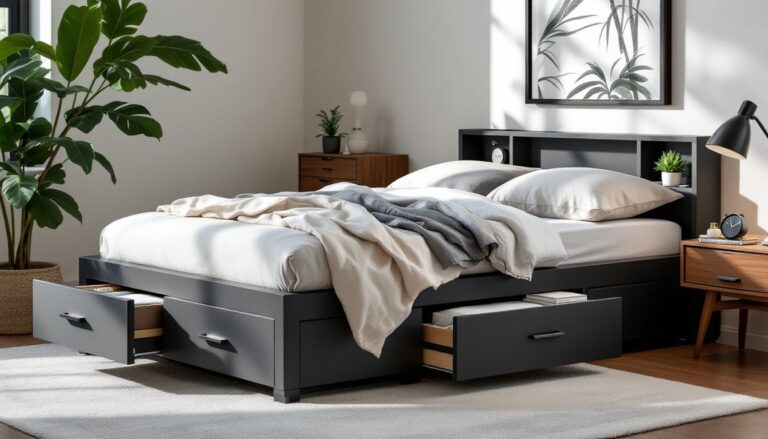
A standard queen bed is 60 inches wide and 80 inches long. A corner queen bed with storage flips the script by anchoring one side (usually the headboard and one long side) against walls. This configuration frees up floor space in the center of the room and integrates storage into the bed frame itself, drawers slide out from under the mattress, shelves mount into the headboard, or both.
The main difference from a conventional bed is intentional design. Instead of a simple box spring and frame, these beds feature compartments, lift-up tops, or side-mounted storage. They’re engineered so the bed itself becomes a storage solution rather than just a sleeping platform.
Space-Saving Benefits For Modern Homes
Placing a bed in a corner shrinks the footprint a room needs to allocate for sleeping furniture. A queen bed normally needs clearance on two sides for access: a corner bed only needs one open side. This instantly opens 50+ square feet of usable floor space in a small bedroom.
For someone working with a 10×12-foot bedroom or smaller, that’s a game-changer. A dresser, desk, or additional seating that wouldn’t fit before suddenly becomes possible. Storage-integrated beds push this further by replacing the need for a separate nightstand or dresser, cutting visual clutter and making the room feel larger psychologically.
Storage Features Explained
Corner queen beds with storage come in several flavors, and the storage type you choose affects both function and assembly difficulty.
Built-In Drawers And Under-Bed Solutions
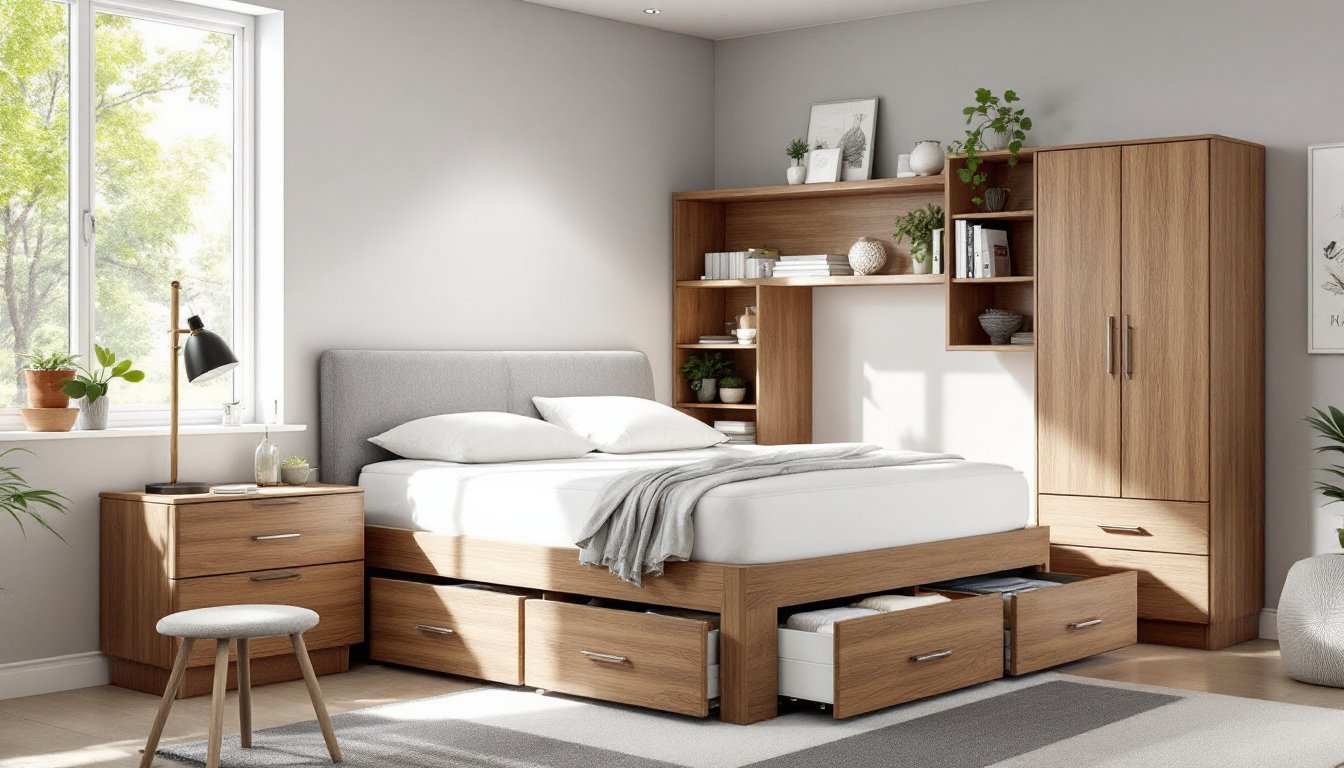
Under-bed drawers are the most straightforward option. The frame sits on legs or a platform base, and rollout drawer systems mount underneath. Standard under-bed drawers run 12 to 18 inches deep and slide smoothly on ball-bearing slides. They’re ideal for off-season clothing, extra bedding, or shoes. Most come fully assembled, you just bolt them to the frame.
Lift-up storage beds go a step further. The entire mattress platform hinges up, revealing a cavernous storage cavity beneath. These require a hydraulic or pneumatic lift system: cheap ones stick or drop unevenly. Quality models use dual-piston lifts rated for the mattress weight plus additional load (typically up to 60–80 lbs). No assembly work needed, you’re just loading and closing.
Drawer quality matters. Look for hardwood frames (not plywood) and metal slides with at least a 100-pound weight rating if you’re storing books or winter coats.
Headboard And Wall Storage Options
Headboad storage takes advantage of unused vertical space. Wall-mounted shelving behind the headboard holds books, plants, or decor while keeping surfaces clear. Headboard cabinets with doors offer closed storage, better if you want clutter hidden from view. Some beds feature a hybrid: open shelves on one side, closed cabinets on the other.
A headboard with shelves adds 4–8 inches of depth to the bed’s footprint. Make sure your bedroom can accommodate that before ordering. Heavier headboards with storage need secure wall anchoring into studs, not drywall alone. If you’re renting, confirm whether wall-mounted storage is allowed.
Design Styles And Materials To Consider
Corner queen beds with storage come in wood, metal, or upholstered frames, and your choice affects durability, aesthetics, and price.
Solid wood frames (oak, pine, or walnut) age well and feel substantial. They’re heavier, take longer to move, but hold up for decades. Prices start around $900 and climb depending on wood grade and joinery. Watch for vague “engineered wood” descriptions, that often means MDF or particleboard veneered to look like wood. Fine for a dorm, risky if you plan to keep it 10+ years.
Metal frames (steel) are lightweight, affordable ($500–$800), and work in modern or industrial styles. They assemble quickly and move easily. The downside: metal can feel cold to the touch, and bed squeaks are more noticeable. Look for welded construction rather than bolted joints: bolts loosen over time.
Upholstered frames wrap wood or metal in fabric. They look polished and dampen vibration. Dust collects in fabric, so they need more cleaning. Prices range $700–$1,500. Choose performance fabrics (microfiber, solution-dyed polyester) if anyone in the home has allergies or pets: natural fabrics stain easier.
Storage material also matters. Drawer boxes should be solid wood or high-grade plywood, not flimsy cardboard. Shelves need to be rated for the weight you’ll store, a shelf sagging under book boxes looks terrible and stresses the headboard.
Selecting The Right Corner Bed For Your Bedroom
Choosing the right bed comes down to honest answers to a few questions.
How much storage do you actually need? If you’re storing seasonal clothing and extra pillows, under-bed drawers are plenty. If you’re replacing a dresser, a lift-up bed or headboard cabinets makes sense. Be realistic, oversized storage that stays empty wastes space and money.
Can your walls support it? Corner beds need one or both walls. If your room has windows, outlets, or radiators in the corner, placement gets tricky. Measure ceiling height too: a tall headboard with shelves in a room with 8-foot ceilings can feel cramped. Aim for at least 2 feet of clearance above the headboard to avoid that boxed-in feeling.
What’s your mattress situation? Corner beds use standard queen mattresses, but the frame height matters. A bed sitting 24 inches off the ground needs a step stool for tall sleepers or people with mobility concerns. Conversely, a bed at 16 inches might be uncomfortable if you’re tall. Test the height in a showroom or order from a retailer with a hassle-free return policy.
Budget and timeline. Solid wood frames take 4–8 weeks to order: particleboard arrives in 2–3 weeks. If you need something fast, check local furniture stores or big-box retailers. Online-only brands often offer better deals but slower shipping. Factor in delivery and assembly, many retailers charge $150–$300 for setup. Some beds require a second person for assembly: don’t skip that step alone.
Check the warranty. Reputable makers offer 1–3 year warranties on frames and structural parts. Drawer slides and lift systems often have separate coverage. Read the fine print, some warranties exclude damage from moving or use outside specified weight limits. A bed supporting a 250-pound person and a 180-pound partner needs a frame rated for at least 500 pounds combined.