Hidden Storage Coffee Tables: The Smart Furniture Solution for Modern Homes in 2026

Modern living spaces demand furniture that pulls double duty. A coffee table with hidden storage solves the perennial problem of clutter without sacrificing style or sacrificing square footage. Whether stashing remote controls, magazines, board games, or throw blankets, these tables offer practical solutions for anyone tired of visual chaos. The best part? A homeowner doesn’t need to shell out premium prices for designer pieces, building or selecting a quality hidden storage coffee table is an achievable project that combines functionality with smart design. This guide walks through the mechanics of hidden storage systems, how to choose the right option for a space, and how to keep one looking sharp for years.
Key Takeaways
- A coffee table with hidden storage solves clutter and space issues by consolidating multiple functions into one focal-point piece without requiring premium designer prices.
- Lift-top tables with pneumatic hinges and drawer-based designs are the two main hidden storage mechanisms, each offering different trade-offs in ease of access, complexity, and durability.
- Selecting quality hardware—ball-bearing slides and hinges rated for at least 10,000 cycles and 50+ pounds of load capacity—prevents premature failure and ensures smooth operation.
- Material choice significantly impacts longevity: solid hardwood and quality plywood with veneer outperform MDF and particleboard, which sag under weight and weaken hardware attachment over time.
- Regular maintenance—wiping hinges every 6–12 months, cleaning wood surfaces with a damp cloth, and respecting weight capacity—extends the table’s lifespan for decades of reliable use.
- Beginners can successfully build a simple lift-top coffee table with basic tools, while drawer designs demand intermediate woodworking skills; pre-made options eliminate skill barriers but limit customization.
Why Hidden Storage Coffee Tables Are a Game-Changer
Hidden storage coffee tables solve a genuine problem: most living rooms have limited floor space and abundant clutter. A traditional coffee table holds a lamp and maybe a decorative bowl. A hidden storage table holds all that plus blankets, board games, chargers, and seasonal décor, all tucked away and out of sight.
They work because they sit at the center of daily life. Unlike closets or cabinets relegated to corners, a coffee table gets used constantly. Dropping the remote into a lift-top compartment takes less effort than walking to another room. A homeowner saves time and mental energy by keeping frequently used items within arm’s reach and still maintains a clean, organized appearance.
From a design perspective, hidden storage eliminates the need for additional side tables, ottomans, or storage chests. In smaller apartments or tight family rooms, consolidating function into one piece creates breathing room. Plus, a well-built coffee table with storage becomes a focal point, it’s conversation-worthy furniture that actually does something.
Types of Hidden Storage Mechanisms
Not all hidden storage systems work the same way. The mechanism a table uses affects ease of access, cost, durability, and build complexity. Understanding the main categories helps a buyer or builder pick the right solution.
Lift-Top and Hinged Designs
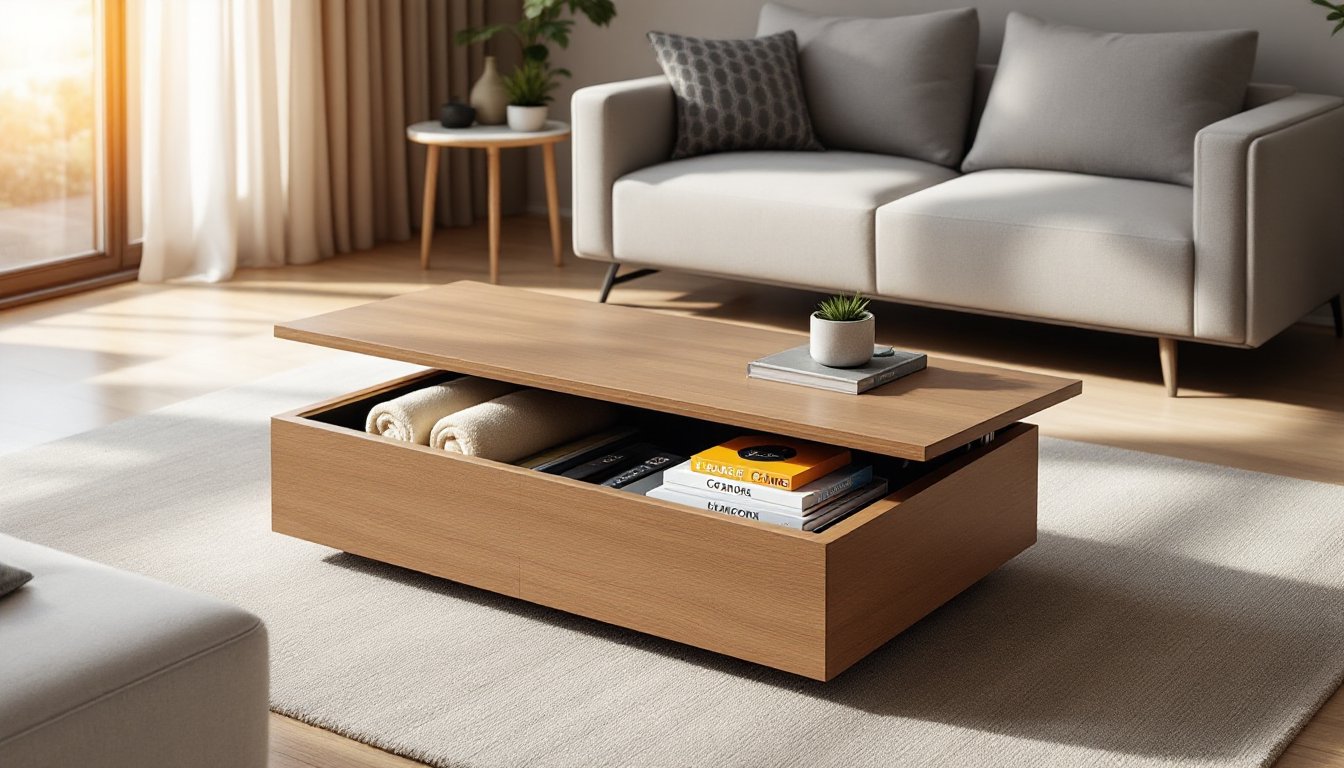
Lift-top tables have a hinged lid that raises up to reveal a storage compartment underneath. Think of it like a treasure chest. The top surface sits flush when closed, and a gentle lift pops it open. Many modern versions use pneumatic hinges or gas struts, hydraulic cylinders that dampen the lid’s movement so it won’t slam shut or fly open unexpectedly. This is especially important if the table will see heavy use or live in a home with young children.
Hinged designs are straightforward to build and modify. The compartment can be as shallow or as deep as needed. Drawbacks include the lid taking up vertical space when open (not ideal in tight rooms) and the hinge mechanism wearing out over time with poor-quality hardware. A ball-bearing hinge rated for at least 10,000 cycles lasts far longer than budget hinges rated for 1,000 cycles.
Drawers and Sliding Compartments
Drawers built into the base of a coffee table function like a dresser or desk, pull out a drawer, grab what’s inside, slide it shut. Some designs hide multiple drawers behind a decorative front panel. Others use sliding compartments that move side-to-side or forward-and-back rather than pull straight out.
Drawers require ball-bearing slides rated for the weight they’ll hold. A cheap slide doesn’t glide smoothly and jams easily. Quality slides cost more upfront but prevent frustration later. Sliding compartments work well in tight spaces because they don’t need room to open fully like traditional drawers. The trade-off is complexity, more moving parts mean more potential points of failure. A drawer is simpler to repair if something breaks, whereas a sliding mechanism may need full disassembly.
Choosing the Right Coffee Table for Your Space
Selecting a hidden storage coffee table depends on room dimensions, usage patterns, and build skill level. Start by measuring the footprint of the current table or the space where the table will sit. A typical coffee table stands 16–18 inches tall, 36–48 inches wide, and 18–24 inches deep. Compartment depth typically runs 6–12 inches (less means shallower storage, more depth eats usable table space).
Consider what will actually get stored. Lightweight items like remotes and magazines don’t demand heavy-duty slides or hinges. Board games, tools, or winter blankets are heavier and need robust hardware rated for 50+ pounds of load capacity. Check the weight rating on any hinge or slide before purchase, undersizing hardware is a common source of premature failure.
Material choice affects durability and aesthetics. Solid hardwood (oak, walnut, maple) looks great and holds up well but costs more and requires finishing. Plywood with veneer is cheaper, lighter, and still durable if edges are sealed and veneer isn’t damaged. Medium-density fiberboard (MDF) is the budget option, smooth, paintable, but prone to sagging under weight and water-sensitive if not sealed. For a frequently accessed compartment, avoid particleboard entirely: it won’t hold hardware securely after a year or two of use.
If building from scratch, a beginner can manage a simple lift-top table with basic tools (miter saw, drill, sander). A drawer-based design requires more precision and intermediate woodworking skills. Buying a pre-made table removes the skill barrier but limits customization. Evaluate both options honestly based on available time and tools.
Maintenance and Care Tips
A well-maintained coffee table lasts decades. Simple habits prevent damage and keep hardware functioning smoothly.
Hinges and slides: Every 6–12 months, wipe down hinges and slides with a dry cloth to remove dust and debris. If the mechanism feels stiff, apply a light machine oil (like 3-in-1 oil) to the moving parts, then work them open and closed several times to distribute. Don’t use WD-40 as a permanent lubricant, it evaporates and leaves residue. For stubborn buildup, a soft brush or old toothbrush clears out corners without scratching hardware.
Wood surfaces: Dust with a soft, dry cloth weekly. For fingerprints or spills, use a slightly damp (not wet) microfiber cloth. Let dry immediately. Avoid harsh cleaners or acetone, these strip finish. If the table has a polyurethane or lacquer finish, these hold up well to regular cleaning. If it’s an oil finish, occasional reapplication (annually or as needed) keeps wood nourished. For water rings or heat marks, lightly sand the affected spot with 220-grit sandpaper, wipe, and reapply finish matching the original.
Weight distribution: Don’t overload the compartment beyond its rated capacity. Over time, excess weight warps the lid, stresses hinges, or sags the frame. A typical table stores 30–60 pounds comfortably: check the manufacturer specs to confirm. Distribute weight evenly inside, bunching everything in one corner strains the mechanism.
Seasonal: In humid climates, wood naturally expands and contracts. If a lid sticks seasonally, resist forcing it: humidity will shift eventually. If it’s unbearable, a light sanding of the edges helps clearance. In dry climates, a small humidifier in the room helps prevent joint gapping.
Conclusion
A hidden storage coffee table bridges style and function in ways traditional furniture can’t. Whether built at home or purchased ready-made, the right mechanism, lift-top, drawer, or sliding, matches the room’s needs and the owner’s tolerance for maintenance. The key is honest assessment of available space, weight capacity, and building skill. Start with a solid design, use quality hardware, and commit to basic care. A table built or chosen well becomes indispensable.