Transform Your Bedroom with a Storage Bench: The Perfect End-of-Bed Solution for 2026
A cluttered bedroom defeats the purpose of having a personal retreat. One of the smartest ways to reclaim floor space and add function without a major renovation is installing a storage bench at the foot of the bed. Unlike a simple ottoman or blanket rack, a proper storage bench combines seating, organization, and style in a single piece, making it one of the best investments for small to medium bedrooms. Whether you’re looking to store seasonal bedding, extra pillows, or daily essentials, a storage bench solves the “where does this go?” problem while adding a finished look to your room’s design.
Key Takeaways
- A storage bench at the foot of your bed combines seating, organization, and style while reclaiming wasted floor space and reducing mental clutter in bedrooms.
- Ideal storage bench dimensions range from 48–60 inches wide and 18–20 inches tall, with height aligning roughly with the mattress edge to maintain visual balance.
- Material selection directly impacts durability—solid hardwood and quality soft-close hinges cost more upfront but prevent sagging and offer long-term reliability.
- A storage bench doubles as functional seating for daily routines like putting on shoes, reading, or folding laundry, maximizing its utility beyond just storage.
- Choose a design style that echoes your existing bedroom décor by matching wood tones, hardware finishes, and upholstery to create visual consistency and intentional design.
- Proper ventilation holes and pneumatic lid supports prevent mustiness and prevent lids from slamming unexpectedly when storing textiles or heavier items.
Why a Storage Bench Belongs at the Foot of Your Bed
The foot of the bed is often wasted real estate. A storage bench fills that gap with purpose. Rather than cramming a dresser into the corner or stacking bins under the nightstand, a bench positioned at the bed’s foot keeps essentials within arm’s reach while maintaining clean sightlines across the room.
From a practical standpoint, this placement reduces traffic around tight bedroom corners. You can toss winter blankets into the bench without opening a closet door or dragging out a storage box from under the bed. That convenience adds up, especially on rushed mornings or when you’re reorganizing for seasonal changes.
Psychologically, having a dedicated storage zone lowers mental clutter. Instead of asking “where should this go?” you have a clear answer. And because the bench is visible and accessible, items actually get used rather than disappearing into the back of a closet forever. It’s simple: visible storage that’s easy to reach gets maintained better than hidden storage.
Maximizing Space and Style
Space optimization goes beyond just adding a bench, it’s about choosing the right dimensions and positioning. A standard end-of-bed bench ranges from 48 to 60 inches wide and 18 to 20 inches tall, fitting snugly between the bed frame and foot wall without blocking sightlines.
Height matters more than people think. If the bench sits too high, it visually chops the room in half. Too low, and it becomes a tripping hazard. The ideal height aligns roughly with the mattress edge or sits slightly lower, creating a visual bridge rather than a barrier.
Width should match the bed frame or stay within a couple of inches. A queen bed is about 60 inches wide, so a bench that’s 54 to 58 inches works without overhang or gaps. Odd dimensions make the space feel unbalanced and waste potential storage.
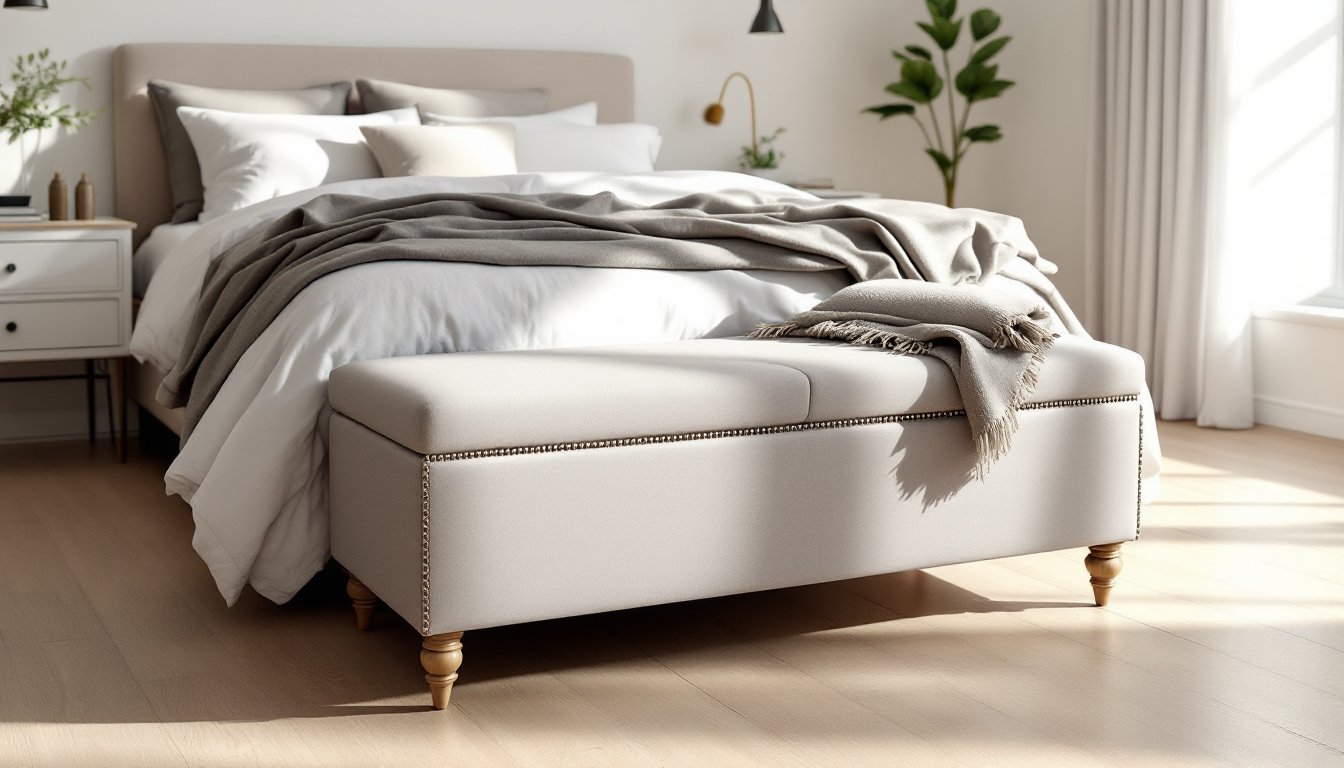
Styled correctly, a storage bench becomes a design anchor. A low-profile upholstered bench in neutral tones (gray, taupe, cream) complements most bedroom schemes. A wooden bench with turned legs reads as traditional: sleek metal frames pair with modern décor. The key is letting the bench tie your room’s aesthetic together rather than fight against it.
Key Features to Look For
Materials and Durability
When shopping or building a storage bench, material selection directly affects longevity and maintenance. Solid hardwood (oak, maple, walnut) costs more upfront but tolerates wear and refinishing. Engineered wood (plywood, MDF with veneer) is budget-friendly but less durable in high-traffic scenarios or humid bathrooms, bedrooms are typically low-humidity, so engineered wood works fine here.
Upholstered benches offer comfort and absorb visual sound, but fabric requires occasional cleaning. Microsuede and performance fabrics resist stains better than linen. Leather looks premium but needs conditioning and can feel cold: faux leather is easier to maintain.
Hardware and hinges are where corners get cut. Cheap hinges sag or stick: quality soft-close hinges (no slamming lids) add $30–50 per bench but prevent finger pinches and keep the space feeling refined. Metal corner braces reinforce joints on wooden frames and add years of stability.
Look for ventilation holes in storage cavities to prevent mustiness, especially if storing textiles. Solid wood benches breathe naturally: sealed MDF boxes can trap moisture. Also check the lid’s weight, if you’re storing 30+ pounds of linens, you’ll want pneumatic lid supports or a counterbalance rod so the lid doesn’t come slamming down unexpectedly.
Design Styles That Match Any Bedroom
A storage bench should enhance your bedroom’s existing décor, not fight it. Traditional bedrooms benefit from upholstered benches with nailhead trim or turned wooden legs. Rich fabrics like velvet or linen pair well with dark wood frames and classic hardware.
Modern and minimalist spaces call for clean lines: low-profile benches with steel legs, flat surfaces, and neutral upholstery or natural wood without decorative details. Avoid ornate legs or busy patterns.
Rustic or farmhouse aesthetics thrive with reclaimed wood, distressed finishes, or simple plank benches. Pair with natural linen or burlap upholstery for authenticity. Metal accents feel right here, think barn-style handles or wrought iron brackets.
Contemporary bedrooms work with mixed materials: upholstered seating on a wooden base, or a wood frame with leather top. Geometric legs or asymmetrical designs read modern without looking sterile.
The bench should be the second-most-prominent furniture piece in the room, after the bed itself. If your nightstands are sleek and metal-legged, echo that in the bench. If your bed has a upholstered headboard, an upholstered bench creates visual consistency. Matching wood tones (all walnut, all light oak) also grounds the space.
Practical Uses Beyond Storage
Storage benches aren’t just for off-season bedding. Think about how you actually use the foot of your bed. Many people sit there while pulling on socks or tying shoes, so the bench doubles as a functional seating surface. A soft upholstered top makes a difference in comfort compared to a hard wooden lid.
Layering a cushion or throw pillow on top adds comfort for reading, applying makeup, or folding laundry. It becomes an informal seating nook without requiring a separate chair in a small bedroom.
For households with pets, a storage bench can conceal a cat bed or small dog crate inside while keeping the top available for sitting or additional storage. It’s a clever way to integrate pet furniture without cluttering the room.
Parents of young children often use end-of-bed benches to organize bedtime routines, tomorrow’s clothes laid out inside, shoes at the bottom, quick access. As kids get older, the bench becomes assignments storage or gaming-chair overflow. Flexibility is the point.
Guest rooms benefit hugely. A bench holds spare pillows, extra blankets, and visiting suitcases in one accessible spot, freeing closet space and keeping things tidy between visitors.
Conclusion
A storage bench at the foot of your bed is one of those projects, or purchases, that pays dividends immediately and long-term. You gain usable storage, seating, visual balance, and a finishing touch to your bedroom design. The key is selecting appropriate dimensions, durable materials, and a style that complements your space. Whether you build one from scratch or buy ready-made, prioritize quality hardware, proper ventilation, and comfort in the upholstery. The result is a bedroom that functions better and looks intentionally designed rather than hastily assembled.