Clever Deck Storage Ideas to Maximize Your Outdoor Space in 2026
A deck is an extension of your home, but clutter has a way of creeping in, garden tools, pool equipment, seasonal decor, and kids’ toys pile up fast. When every square foot counts, smart deck storage ideas become essential to keeping the space functional and inviting. Rather than sacrificing square footage or aesthetics, savvy homeowners are discovering multiple ways to build storage right into their deck design. The following solutions range from simple add-ons to built-in projects that maximize storage capacity without consuming the outdoor living area itself.
Key Takeaways
- Built-in bench seating with hidden storage provides dual functionality by offering comfortable seating while maximizing deck storage for garden supplies and seasonal items in limited square footage.
- Under-deck storage transforms wasted space beneath elevated decks into functional zones by installing waterproof modular systems and weatherproof shelving to protect items from rain and sun exposure.
- Vertical wall-mounted solutions like pegboard panels, rail organizers, and hanging baskets efficiently utilize deck storage without consuming valuable floor space on smaller decks.
- Standalone deck boxes and weather-resistant cabinets offer the simplest storage approach, requiring no installation while providing waterproof seals, UV-resistant finishes, and flexible repositioning.
- Multi-functional furniture such as storage ottomans, rail planters, and side tables with lift-tops add storage capacity while maintaining seating and surface space for everyday deck living.
- Effective deck storage combines moisture management, weather-rated materials, and annual maintenance to keep outdoor living spaces organized and functional year-round.
Built-In Bench Seating With Hidden Storage
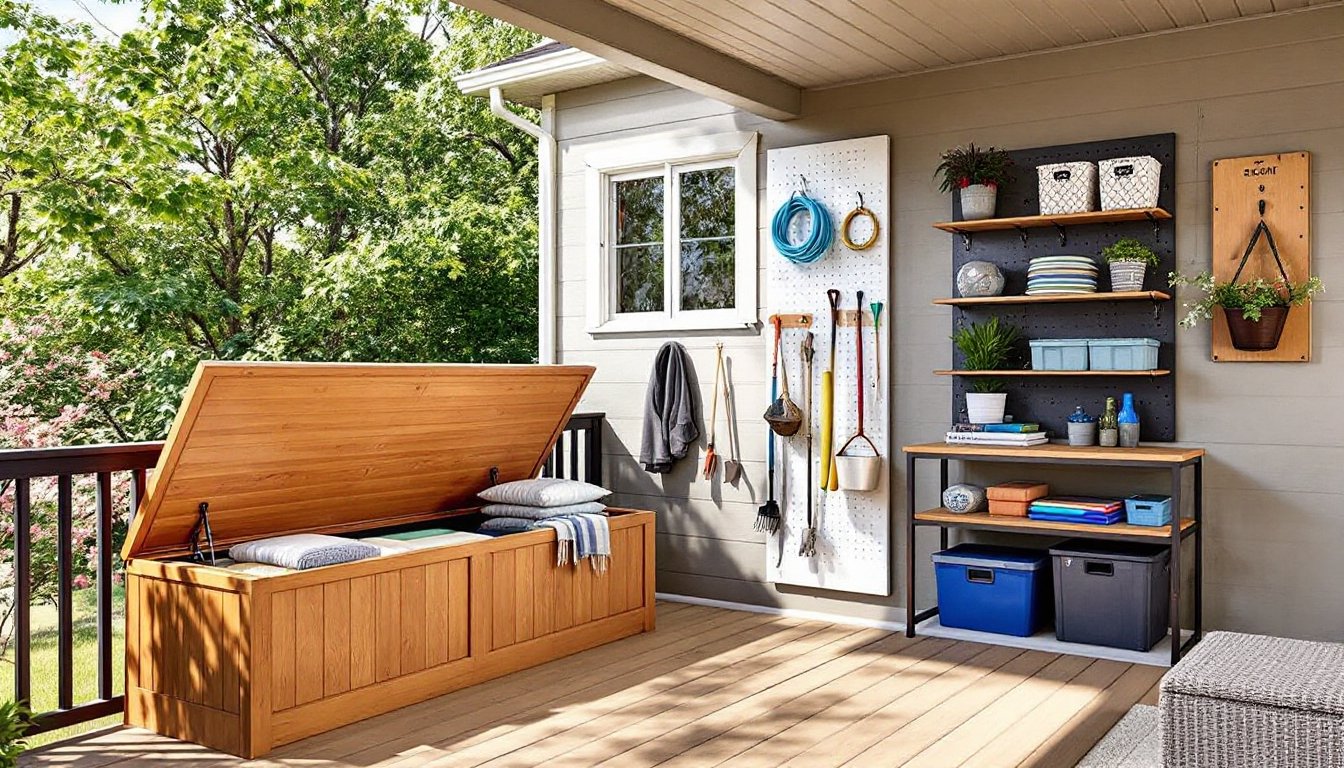
A built-in bench along a deck rail or corner serves double duty: it provides seating and houses storage underneath. This approach is ideal for decks with limited square footage because you gain two functions in one footprint.
The basic design involves framing a wooden seat base with internal clearance (typically 12–18 inches deep and 16–24 inches high for comfortable seating) and mounting it to the deck’s rim joist or posts. Hinged lids or removable seat cushions lift to reveal the cavity below, where you can store cushions, garden supplies, or small seasonal items.
For the project itself, you’ll need:
- Pressure-treated lumber (2×12 or 2×10 for sides and supports)
- Deck screws (3-inch exterior-grade)
- Exterior wood stain or sealant
- Hinges rated for outdoor use (stainless steel or powder-coated)
- Weatherstripping to prevent water intrusion
Construction involves building a simple box frame, securing it to the deck structure, and adding a hinged lid. The key is ensuring proper drainage, drill small weep holes in the bottom corners so standing water doesn’t accumulate. Sand all surfaces smooth before staining to prevent splinters and extend the wood’s life. If you’re storing items sensitive to moisture (like cushions), add a sheet of rigid foam insulation or vinyl liner inside the cavity to create a vapor barrier.
This project typically requires a weekend and basic carpentry skills. A handheld circular saw, drill, and level are your main tools. If you’re not confident routing hinges or want a more polished finish, a local contractor or woodworker can customize the design for a few hundred dollars.
Under-Deck Storage Solutions
The space directly beneath an elevated deck is often wasted. With a little planning, it becomes prime real estate for storage.
Under-deck storage works best on single-story or moderate-height decks where headroom allows for easy access. The existing deck joists and beams become your overhead shelter, protecting items from direct rain and sun.
Waterproof Containers and Shelving Systems
Commercial under-deck systems (like Trex Under-Deck, DekVision, or similar modular panels) install between joists to create a weathertight ceiling and channel water to the edges. This prevents wet drips from spoiling the space below and allows you to store items safely. Once that overhead protection is in place, add shelving or storage racks.
Your options include:
- Metal wall-mounted shelving units (zinc-plated or galvanized to resist rust) anchored to rim joists or posts
- Plastic shelving racks (cheaper and lightweight, but less durable for heavy loads)
- Wooden shelving (treated lumber with concrete block supports for height adjustment)
For storage containers themselves, use waterproof plastic totes with tight-sealing lids, not cardboard or untreated wood. Label everything and stack thoughtfully so you’re not hunting for buried items.
Before installing an under-deck system, verify that your deck’s structural design permits the weight of shelving and stored goods. Also check local codes, some jurisdictions restrict enclosed under-deck spaces or require permits if the area becomes habitable (enclosed walls, heating, etc.). When in doubt, consult the deck manufacturer or a local engineer.
Vertical Wall Storage and Hanging Options
Vertical storage transforms wasted wall and railing space into functional zones. This approach is especially valuable on smaller decks where floor space is at a premium.
Wall-mounted solutions include:
- Pegboard panels (exterior-grade, sealed with a water-resistant finish) with hooks and brackets for tools, hoses, and small containers
- Rail-mounted organizers (specialized brackets that hook onto deck railings without permanent fastening)
- Wall shelves (galvanized or composite material for durability) for potted plants, deck boxes, or frequently used items
- Hanging baskets and pouches (fabric or plastic) suspended from pergolas or overhead beams
Installing wall-mounted storage on a composite or vinyl rim joist differs from wood. Composite materials don’t hold fasteners as securely, so use specialized composite fasteners (Spax, Wej-It, or equivalent) rather than standard screws. Pre-drill all holes to prevent splitting or fastener pull-out.
Railing-mounted organizers are non-permanent options, they clamp or bolt to the railing without drilling into the deck structure itself. This makes them ideal for rentals or temporary solutions. Weight limits vary by design, typically 20–50 pounds per unit, so don’t overload them.
Keep this storage accessible, place frequently used items (garden gloves, pruners, light tools) at waist height. Reserve higher shelves for seasonal items or decorative elements. Paint pegboard and shelves with exterior-grade primer and paint (two coats) or stain them to match your deck for a cohesive look.
Deck Boxes and Weather-Resistant Cabinets
Standalone deck storage boxes are the simplest route if you want to avoid construction. They sit on the deck surface, require no installation, and can be moved or replaced easily.
When shopping for deck boxes, prioritize these features:
- Waterproof seals (hinged lids with rubber gaskets, not loose-fitting tops)
- Durable materials: resin (lightweight, no maintenance), cedar or hardwood (aesthetic but requires yearly sealant), or recycled plastic composite (good middle ground)
- Interior drainage or moisture management (vents or drainage holes to prevent mildew)
- UV-resistant finish to prevent fading and material degradation under sun exposure
- Weight-rated capacity (confirm it matches your storage needs and the deck’s load limits)
Capacity ranges widely, compact boxes hold 25–50 gallons: large models reach 150+ gallons. A typical deck can usually support several storage boxes without structural concern, but don’t fill every inch: leave room to move around and enjoy the deck.
Alternatively, custom cabinet systems (built-in or semi-permanent) give a finished look. These are essentially outdoor storage sheds scaled to fit a deck. They’re pricier than boxes but offer more weatherproofing, shelf organization, and aesthetic integration with your deck design. If considering this route, get a licensed contractor involved, some cabinet systems require footings or permanent fastening, and permits may apply depending on your area.
Position boxes and cabinets along edges or corners where they don’t obstruct sightlines or seating areas. Keep them away from high-traffic zones so you’re not constantly working around them.
Multi-Functional Furniture for Storage and Seating
Furniture that pulls double duty maximizes usefulness without consuming extra space. Beyond built-in benches, consider these hybrid pieces.
Storage ottomans and side tables with lift-top designs provide seating, surface area for drinks or decorative items, and hidden compartments for small supplies. Outdoor furniture retailers offer weather-resistant models in wicker, metal, or composite materials. They’re lighter than benches and easier to reposition if your deck layout changes.
Deck rail planters with built-in storage combine greenery with a compartment for small tools or items. They hook onto railings or freestanding posts, saving corner space while adding visual interest.
Storage-integrated side tables and bars give you surface space plus hidden cubbies underneath. These work well near seating areas, keeping sunscreen, books, and remote controls out of sight but within arm’s reach.
When selecting multi-functional pieces, verify that materials are rated for outdoor use, not all furniture labeled “outdoor” is truly weather-resistant. Check for:
- Stainless steel or powder-coated hardware (not bare metal prone to rust)
- Sealed or naturally rot-resistant materials (teak, cedar, composite, or treated wood)
- UV-stable finishes (especially for painted or stained pieces)
- Weight and stability on a deck surface (ensure it won’t tip or slide)
This furniture is moveable, so you can refresh your layout seasonally without major work. It’s also a lower-commitment option if you’re not ready to build permanent storage.
Conclusion
Effective deck storage doesn’t mean cramming your space full of boxes. The best approach combines one or two strategies, a built-in bench, some vertical wall organization, and maybe a single large deck box, tailored to your layout and needs. Start by assessing what you actually store, where you use it, and how often you access it. Then choose solutions that are proportional and accessible. Keep moisture management in mind for any enclosed storage, use weather-rated materials, and don’t skimp on sealing wood or checking fasteners annually. A well-organized deck extends your living space and stays functional year-round.