Sofa Beds With Built-In Storage: The Ultimate Space-Saving Solution for 2026
Furniture that pulls double, or triple, duty isn’t luxury in today’s homes: it’s survival. Whether squeezing a guest bedroom into a studio apartment or maximizing a finished basement, a couch with storage and bed functionality solves the space puzzle without sacrificing comfort or style. A sofa bed with integrated storage combines sleeping surfaces, seating, and organizational capacity in one piece, eliminating the need for a separate bed frame, nightstand, or storage ottoman. This guide walks through why these hybrid pieces are worth considering, what types exist, and what features actually matter when shopping.
Key Takeaways
- A couch with storage and bed consolidates sleeping, seating, and organization into one piece, cutting floor space usage from 80+ square feet to under 50 square feet.
- Modern couches with storage and bed functionality use premium mattresses (5–6 inches of memory foam or hybrid construction) and solid hardwood frames, making them genuinely comfortable for guest use.
- Sectional sleepers offer flexibility and large storage capacity but require 6.5+ feet of depth when pulled out, while futon-style alternatives are lighter and more compact but have thinner mattresses.
- Prioritize kiln-dried hardwood frames, metal hinges rated for 10,000+ cycles, and fabric durability features like removable, machine-washable covers when selecting a storage sofa bed.
- Always measure doorways, hallways, and destination room dimensions before purchasing, as some assembled sectional sleepers exceed standard 32-inch interior door widths.
- Invest in mid-range to premium models rather than budget options—higher-quality storage sofa beds last longer and provide significantly better sleeping comfort for guests.
Why Choose A Couch With Storage And Bed Functionality
Space constraints are real. An apartment guest room that doubles as a home office needs furniture that adapts. A sofa bed with built-in storage consolidates three separate pieces, a sofa, guest bed, and storage trunk or dresser, into one footprint.
The math is simple: a standard queen-size bed frame occupies roughly 65 square feet of floor space. Add a nightstand (9 sq ft) and a dresser (8 sq ft), and you’re over 80 square feet. A storage sofa bed delivers sleeping, sitting, and tucking-away-linens capacity in under 50 square feet. For renters who can’t knock down walls or add built-ins, this functionality is transformative.
Beyond square footage, these pieces reduce clutter visually and practically. Throw pillows, extra bedding, seasonal decor, and guest supplies hide beneath cushions or inside drawers. The living room doesn’t look like a storage unit, it looks intentional. That matters for mental clarity and resale appeal if a renter eventually moves or a homeowner lists.
Comfort is the understandable hesitation. Traditional sofa beds, the kind with a thin metal frame that folds, earned their reputation for sagging and squeaking. Modern storage sofa beds use higher-quality mattresses (often 5–6 inches of memory foam or hybrid construction), wood-frame construction, and better hinges. They’re genuinely sleepable, though a true guest room bed will still win for nightly use.
Popular Types Of Storage Sofa Beds
Sectional Sleepers With Under-Seat Storage
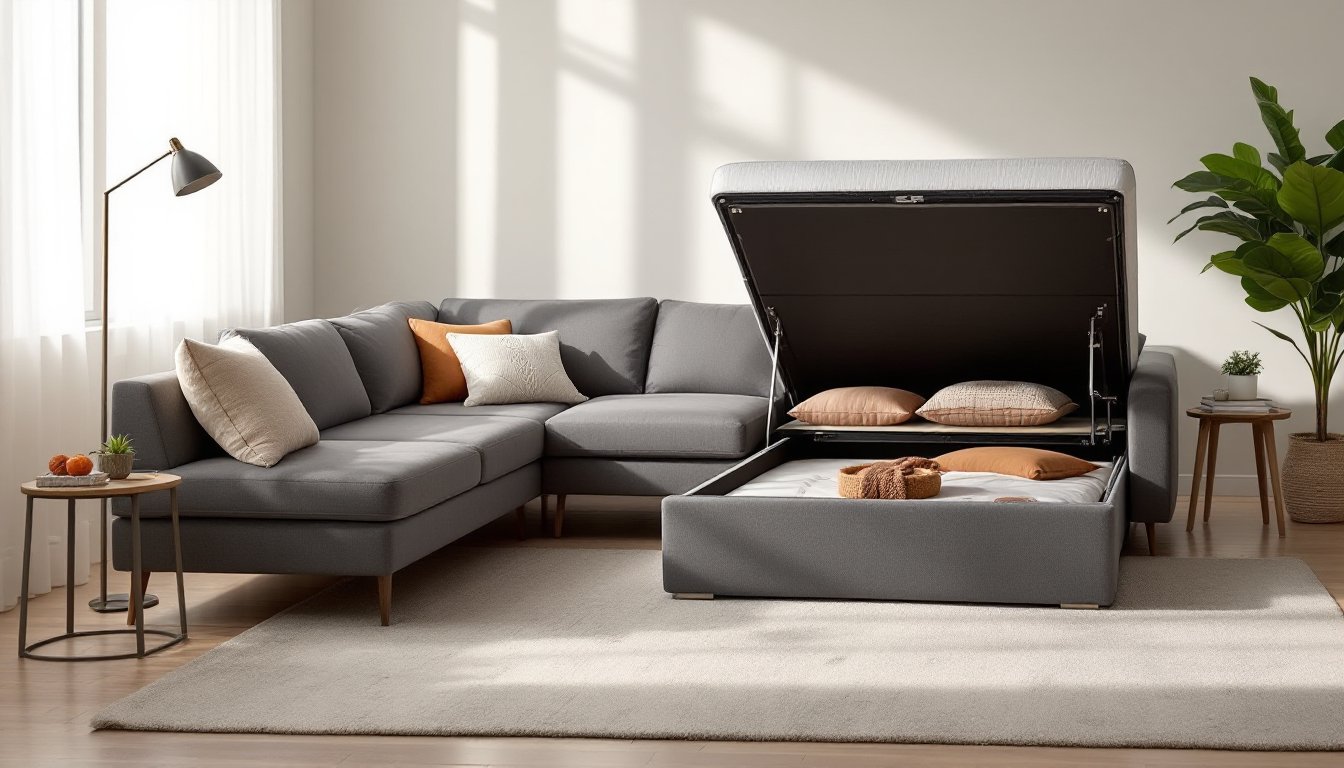
L-shaped and U-shaped sectional sleepers are the workhorses of modern small spaces. One or both sections pull out to reveal a bed frame (typically queen-size, sometimes full), and beneath the non-bed section lives a large storage cavity. Some models feature removable drawers on wooden sliders: others are open bins. A few high-end brands offer power-assist hydraulics that ease the pull-out action.
The advantage is flexibility. You can float the sectional in a room and position the storage component on whichever side makes sense for your layout. The disadvantage is depth: a pulled-out bed eats into the room quickly. Measure before buying. A queen sleeper sectional fully extended can run 6.5 feet deep into a room. If that’s too much, consider a full-size sleeper or a futon alternative.
Durability depends on the frame. Look for kiln-dried hardwood (beech, birch, oak) rather than plywood. Metal hinges should be rated for at least 10,000 open-close cycles. Cheaper models use plastic hinges that strip within a year or two.
Futon-Style Storage Beds
Futon frame sleepers with side or under-platform storage are lighter and lower-profile than sectionals. A futon mattress (typically 6 inches thick, often cotton or polyester blend) sits on a wooden or metal frame that folds flat to become a bed. Storage compartments attach beneath the platform or to the frame’s sides via drawers or hinged doors.
Futon-sleepers work well in smaller footprints, a studio or bedroom nook where a sectional would dominate. They’re also easier to move: most futon beds weigh 150–250 lbs, while a sectional can exceed 400 lbs.
The trade-off is mattress quality. Futon mattresses are thinner and denser than innerspring or memory-foam alternatives. They’re fine for occasional guests or a college dorm setup, but they won’t match the comfort of a premium sofa bed mattress. If nightly use is the goal, step up to a mid-range or premium memory-foam futon mattress: expect to pay $300–600 versus $80–150 for basic cotton.
Key Features To Look For When Shopping
Mattress thickness and material make or break the sleeping experience. A 5–6 inch memory-foam mattress or a hybrid (foam plus pocket coils) is the minimum for comfort. Anything thinner than 4 inches will feel thin and lack support. Memory foam is easier on joints: pocket coils provide more airflow and bounce. Some high-end models use latex blends for durability and temperature regulation.
Frame construction is invisible until it fails. Solid hardwood frames (beech, birch, oak) resist warping and splintering. Engineered wood (plywood with veneer) works if the ply count is high (7+ layers) and gluing is tight. Avoid particleboard frames: they sag within 2–3 years under regular use. Check that the hinges and springs are reinforced metal, not plastic.
Storage access and capacity should match how you’ll actually use the piece. If you’re storing linens and off-season pillows, open bins under the bed work fine. If you want to tuck away breakables, sealed drawers with handles are safer. Some models offer lift-up seat cushions above the storage: others require you to pull out the entire bed frame to access bins below. The latter is a pain for regular access.
Fabric durability matters, especially if kids or pets are in the picture. High-performance fabrics (polyester microfiber, solution-dyed acrylic, or crypton-treated blends) resist staining and pilling better than standard cotton-linen blends. They’re also easier to spot-clean. Request cleaning instructions and check if covers are removable and machine-washable, a feature worth paying extra for.
Dimensions and weight capacity need real measurement. Pull the product specs and measure your doorways, hallways, and the destination room. Some sectional sleepers don’t fit through standard interior doors (32 inches) when fully assembled. Weight limits typically run 300–600 lbs per seating section: if a couch will see heavy daily use, check the fine print. Also verify how the manufacturer defines “queen-size bed”, some list the mattress size (60″ × 80″), while others give the sleeping area when the section is pulled out (which may be slightly less due to frame thickness).
Conclusion
A sofa bed with storage isn’t a compromise if you choose thoughtfully. Measure your space, prioritize mattress and frame quality, and be honest about whether guests will use it nightly or twice a year. For multi-purpose rooms, modest apartments, and anyone tired of visual clutter, a well-built storage sleeper sofa earns its place. Skip the bargain basement models and invest in one with a solid hardwood frame and a decent mattress, it’ll feel less like a folding bed and more like real furniture.